6 Locations for Same Day Passport Photos in 2026
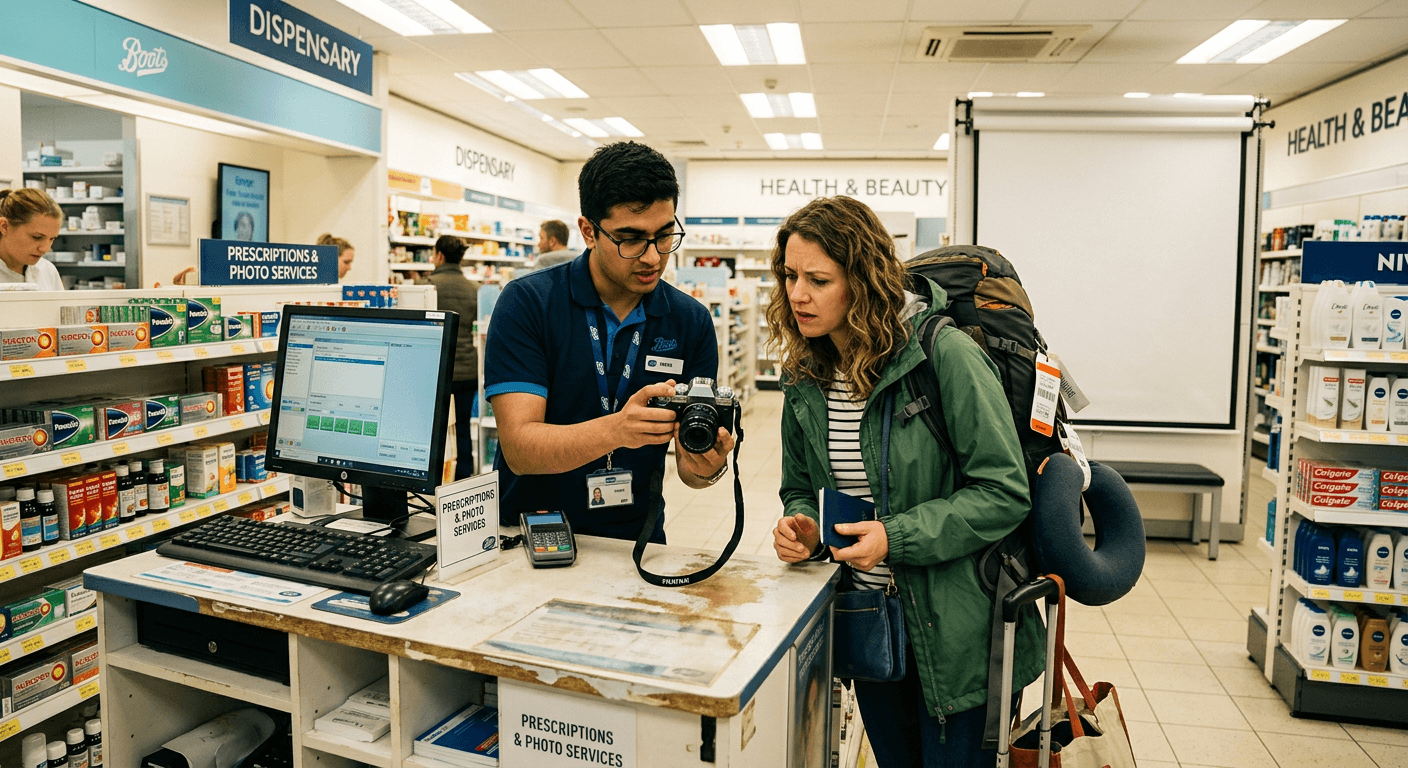
Standing at the check-in desk while realizing a child's passport expired six months ago triggers a highly specific type of panic. When the departure flight leaves in 72 hours, an online renewal is no longer an option, and the immediate bottleneck shifts from the government processing queue to finding a location capable of producing compliant same day passport photos before the nearest agency appointment. You cannot rely on a smartphone printer or a standard home office setup when the biometric rejection rate for physical prints remains notoriously high. Getting a fast passport photo requires navigating physical retail infrastructure, understanding which imaging systems automatically verify compliance, and knowing exactly what level of quality you are paying for.
Quick Summary
Securing same day passport photos requires matching your specific deadline and applicant type to the right physical service counter. While pharmacies offer immediate walk-in access and shipping centers provide superior document routing, specialized setups remain the only reliable choice for complex foreign visas or infants.
- Retail pharmacies offer walk-in convenience but struggle with non-standard requirements.
- Shipping centers combine photo capture with immediate application mailing capabilities.
- Automated kiosk systems reduce the risk of biometric rejection for standard domestic sizes.
- Dedicated studios are mandatory if you need off-standard square cuts for international visas.
Table of Contents
- Understanding Same Day Passport Photos and Service Models
- 1. Walgreens Photo
- 2. CVS Photo
- 3. FedEx Office
- 4. The UPS Store
- 5. United States Postal Service (USPS)
- 6. Passport Photo Fast
- Matching Your Urgency to the Right Service Model
- Recommended Reads
| Product | Service Model | Features | Pros | Cons | Target Audience |
|---|---|---|---|---|---|
| Walgreens Photo | Retail Pharmacy | $16.99 for two prints, free digital copy, 1-hour processing | Walk-in access, Digital copy included, Fast turnaround | Staff lack photo training, Aisle lighting creates shadows, Poor infant setup | Shoppers needing basic domestic prints while running errands |
| CVS Photo | Retail Pharmacy | $17.99 for two prints, Kodak Moments system, immediate prints | Automated biometric check, Instant physical output, Wide availability | Digital copy costs extra, Rigid US-only software, Busy store environment | Walk-ins requiring digital verification before leaving the store |
| FedEx Office | Shipping & Postal | Commercial cameras, heavy-duty trimming, shipping integration | High DPI commercial printing, Sharp colors, Immediate mailing | Prioritizes speed over quality, Cannot accommodate infants, Harsh lighting | Travelers mailing applications directly to regional agencies |
| The UPS Store | Shipping & Postal | Online appointments, structured time slots, 3,900+ locations | Predictable scheduling, Dedicated photo corner, Avoids general lines | Defeats emergency walk-ins, Inconsistent franchise setups, Limited foreign knowledge | Professionals needing an exact timeline during their workday |
| USPS | Shipping & Postal | Federal capture system, all-in-one processing, sworn agent review | Minimal transit damage risk, Federal compliance, One-stop shop | Severe queue delays, Slow processing times, Strict rejection policies | First-time applicants submitting the physical DS-11 form |
| Passport Photo Fast | Specialized Services | Multi-point lighting, DSLR cameras, custom millimeter sizing | Shadow-free environment, Exact custom dimensions, Professional review | Extremely sparse locations, Requires travel time, Higher baseline cost | Expatriates requiring complex foreign visa dimensions |
Understanding Same Day Passport Photos and Service Models
Before racing to a store that advertises a passport photo open now, you must identify what type of facility actually suits your application. We separate these locations into three distinct categories based on their primary operational focus.
The Retail Pharmacy model treats photo capture as an add-on service. You walk in without an appointment, stand against a pull-down screen in an aisle, and rely on whoever is working the register to operate the camera. The Shipping & Postal model integrates the photo into the logistics chain. These locations expect you to print the photo and immediately hand over the application for federal routing. The Specialized Services model focuses entirely on photographic precision, employing dedicated studio lighting and manual cropping software to hit exact millimeter requirements for foreign governments.
Practical rule: Never rely on a general retail clerk to verify international biometric standards; always bring the exact dimensional requirements printed out for them to measure against.
1. Walgreens Photo
At Walgreens Photo, the in-store passport photo service costs $16.99 for two government-compliant prints, yielding a quick passport photo for walk-in customers. Operating strictly as a Retail Pharmacy, it relies on general floor traffic rather than scheduled appointments and should not be compared against a dedicated studio. A pharmacy clerk escorts the applicant to a designated aisle endcap fitted with a pull-down white screen. They capture the image using a standard digital point-and-shoot camera. The SD card is then walked over to the centralized minilab station. There, the clerk crops the image manually on the retail kiosk software to hit the required two-inch square dimensions. Processing happens locally on their thermal dye-sublimation printers. A free digital copy of the photo is sent via email alongside the physical purchase. Passport photos are typically ready within one hour or less of being taken, with no appointment required.
Walk-in convenience relies on staff availability
What would make us hesitate is the lack of dedicated photographic training. The person pressing the shutter is often the same employee managing the front register, processing prescriptions, or restocking shelves. This leads to rushed framing and a desire to just get the job done quickly. Overhead fluorescent lighting in retail aisles frequently casts harsh shadows under the applicant's eyes or chin, which directly violates strict Department of State guidelines. Trying to hold a newborn up against this screen is a logistical nightmare. Taking an infant to a retail pharmacy often violates the strict positioning rules outlined in the United States Baby Passport Photo Guide because the setup entirely lacks a flat, shadow-free surface. If the clerk misses a shadow, the application gets delayed.
General retail environments simply cannot accommodate complex requests. Anyone needing a visa for a country with off-standard sizing or an absolute pure white background rather than off-white should bypass this aisle entirely.
Head to this counter when you simply need a compliant two-inch print for a standard adult renewal and have an hour to kill in the store.
Pros
- No appointment necessary for walk-in service
- Free digital copy sent directly via email
- Prints ready in under one hour
Cons
- Staff lack dedicated photographic training
- Overhead aisle lighting creates facial shadows
- Inadequate physical setup for infant photography
2. CVS Photo
Unlike standard counters that rely purely on manual cropping, CVS Photo uses the Kodak Moments Passport & ID Photo System to verify government compliance at the point of capture. As a Retail Pharmacy, it operates on convenience and volume, meaning it should not be compared to high-end portrait centers where staff spend ten minutes posing you. The applicant stands against a retractable white backdrop mounted near the front registers. The employee takes the picture using a tethered digital camera. Once loaded into the Kodak kiosk, the software scans the face for standard biometric markers. It checks head height, eye alignment, and background uniformity before allowing the print job to proceed. If the system flags an error, the clerk must retake the shot. The thermal printer ejects the sheet containing two 2x2 inch ID prints immediately, costing $17.99 at select local CVS locations with no appointment needed. Customers can add a digital copy of the photo delivered to their email for $3.99.
Automated verification prevents the most common rejection triggers
We would skip this option if we were applying for a foreign visa with non-standard background color requirements. The Kodak software is rigidly locked to US domestic standards. Attempting to override the system to print a 35x45 mm layout often frustrates the staff, who are instructed not to bypass the automated biometric checks. Standard dimensions differ abroad, as noted in the United Kingdom Baby Passport Photo Guide, leaving automated domestic kiosks functionally useless for expatriates. For standard domestic needs, however, the automated check removes human error from the cropping phase. It guarantees the face takes up exactly the right percentage of the frame.
The extra fee for digital delivery feels punitive in an era where online renewals are becoming standard. Anyone filing their application entirely through a web portal is essentially forced to pay a physical print surcharge plus a digital add-on just to secure their own file.
Choose this desk when you require absolute certainty that a standard domestic print will pass fundamental biometric checks before leaving the store.
Pros
- Kodak system automatically checks biometric markers
- Instant physical printing reduces wait times
- Available nationwide at most neighborhood corners
Cons
- Digital file delivery requires an extra fee
- Software rigidly locks out foreign visa dimensions
- Staging areas sit directly in busy store traffic
3. FedEx Office
Bypassing the pure retail queue entirely, FedEx Office separates document services from consumer goods, meaning the staff handles imaging and printing all day long. Functioning as a Shipping & Postal center, the core infrastructure supports moving paper rapidly, meaning it should not be compared against bespoke photographic studios. Customers walk into the print and ship area, where a designated staging zone features standardized continuous lighting. An employee uses a high-resolution digital camera to frame the applicant. Because the core business revolves around professional document reproduction, the printers here operate at higher DPI specifications than standard retail photo kiosks. The image data moves from the camera directly into their networked printing system. The operator manually scales the crop box to the two-inch standard and cuts the physical sheet using a heavy-duty rotary trimmer. The process yields two physical photos ready for immediate application attachment.
Dedicated print infrastructure yields sharper physical output
The main advantage here sits with the machinery. You avoid the faded, slightly magenta tint that plagues poorly maintained pharmacy minilabs. What would give us pause is the rigid corporate workflow. The environment is built for speed and adult applicants standing at counter height. Infants require a completely different approach. The lighting requirements detailed in the Canada Baby Passport Photo Guide are notoriously difficult for standard courier clerks to hit without a flat lay setup. They simply do not have the time or the floor space to pause the shipping queue while a toddler stops crying.
Practical rule: If the location uses standard overhead fluorescent lights without a fill flash, check the print for under-eye shadows before paying.
The primary focus is moving commercial shipments, so staff will not waste time adjusting contrast or fixing minor shadows on an applicant's neck. If the raw image looks passable, they hit print and call the next customer forward.
Opt for this commercial setup when you need to immediately overnight the finished application package to a regional processing agency.
Pros
- High DPI commercial printers yield sharper colors
- Allows immediate shipping of completed applications
- Dedicated rotary trimmers ensure perfectly straight edges
Cons
- Workflow prioritizes speed over minor visual corrections
- Counters are not equipped to handle infant positioning
- Relies entirely on ambient commercial building lighting
4. The UPS Store
Why gamble on availability? Online appointment scheduling is available for passport and ID photos at more than 3,900 The UPS Store locations nationwide. The booking system channels foot traffic into structured time slots. Applicants simply claim a block on the location's digital calendar. Operating as a Shipping & Postal center, this franchise model should not be compared to walk-in retail aisles where you compete with grocery shoppers. Upon arrival, the desk agent leaves the main counter. They direct the customer to a small side setup with a mounted camera and a fixed white backdrop. The agent fires the shutter. They verify the lighting on the digital display and send the file to the back-office printer. Images are printed on standard glossy photo stock. A specialized punch tool extracts identical two-by-two squares. The process takes less than ten minutes because the system reserves the clerk's time specifically for this task.
Time-slot reservations eliminate the unpredictability of walk-in services
This solves the worst part of retail logistics: standing behind someone mailing fifteen heavy boxes while your own deadline approaches. We appreciate the predictability. The structured timing works brilliantly for busy adults taking their lunch break. What would make us hesitate is the variability of store layouts. Because these are franchise operations, one store might have a pristine corner studio while another crams the backdrop right against a busy front door. When you need a fast print for a different country, checking US & International Baby Passport Photo Requirements & Guides prevents a costly rejection, as local franchise owners rarely memorize foreign specifications.
Booking ahead fundamentally defeats the purpose of an unplanned emergency stop. If you discover a paperwork error on the way to the airport, a scheduling tool that only shows open slots for tomorrow afternoon is completely useless.
Book a slot here if your workday requires an exact timeline rather than waiting indefinitely in a general service line.
Pros
- Online appointments guarantee immediate service upon arrival
- Specialized punch tools create clean border cuts
- Avoids the general retail checkout queue
Cons
- Requires booking ahead, defeating emergency walk-ins
- Franchise layouts vary wildly in staging quality
- Clerks rarely understand non-US formatting rules
5. United States Postal Service (USPS)
Standing in a federal building lobby with a completed DS-11 form, getting the image captured directly at the United States Postal Service (USPS) keeps the entire transaction under one roof. Operating as a Shipping & Postal facility, it prioritizes government compliance over raw speed and should never be compared to the instant gratification of a pharmacy kiosk. An applicant approaches the dedicated passport counter. The postal worker pulls down a regulation background screen directly behind the desk. They capture the image using a federally issued camera system calibrated specifically for State Department compliance. The worker immediately reviews the raw file against their internal manual. If it passes, they print it locally, attach it directly to the physical application form, and swear the applicant in. The entire package is then sealed and routed directly into the federal processing network from that very desk.
Consolidated processing reduces total application transit time
Keeping the photo capture and the final submission tied together minimizes the risk of physical damage to the print. We would steer clear of this route if speed is the only metric that matters. Federal clerks are meticulous, which is excellent for compliance but terrible for throughput. You are trapped in the same queue as people applying for complex name changes and lost document replacements. If the location's background isn't pure white, review the Help Center for alternative processing methods because postal clerks will simply reject you and tell you to try again next week if the capture fails their visual inspection.
Processing queues for full applications mean taking the picture here often involves waiting for hours. It is physically impossible to pop in and out just for the prints without getting stuck behind extensive paperwork checks.
Commit to this line when you are submitting a brand new physical application and require an authorized agent to witness your signature anyway.
Pros
- Camera systems are calibrated to federal specifications
- Eliminates the need to transport fragile prints across town
- Clerks are trained specifically on government acceptance criteria
Cons
- Queues frequently stretch for hours during peak seasons
- You cannot quickly bypass the main application line
- Meticulous visual checks often lead to immediate retakes
6. Passport Photo Fast
When a visa application requires a non-standard 51x51 mm square cut, Passport Photo Fast offers the specialized on-site studio services that mass-market pharmacies actively turn away. As a Specialized Services center, it focuses on photographic precision and should not be compared to quick drugstore queues. The applicant enters a dedicated photographic space rather than a repurposed retail aisle. The staging area uses multi-point studio lighting, including fill lights and diffusers, to eliminate the harsh under-chin shadows that plague standard overhead fixtures. The photographer shoots with a DSLR camera on a tripod, allowing for precise framing. The raw image is pulled into professional editing software where the operator manually checks edge contrast, head tilt, and background purity. They format the output to exact millimeter specifications for any country, printing on specialized commercial photographic paper before cutting the final product with extreme precision.
Dedicated lighting environments eliminate biometric rejection risks
Professional studios excel at the edge cases. This is where you take large families, or anyone with highly specific religious headwear that automated systems misread. We would pause before recommending this for standard domestic renewals purely based on logistics. If an agent rejects a retail print, having a 100% Refund Policy on your backup digital tool provides a safety net, but driving out of your way to a standalone physical studio takes hours. Finding one requires navigating away from central commercial districts.
Physical locations are incredibly sparse compared to massive national retail chains. If you live outside a major metropolitan hub, you might have to drive two hours just to reach the front door of a properly equipped photo studio.
Seek out this specialized environment for complex visa sizes that standard automated kiosks outright refuse to process.
Pros
- Multi-point lighting eliminates shadows entirely
- Operators can generate exact millimeter dimensions for any visa
- DSLR cameras provide vastly superior image resolution
Cons
- Physical studios are rare outside major urban centers
- Baseline costs are higher than standard retail prints
- Requires a dedicated trip rather than multitasking errands
Matching Your Urgency to the Right Service Model
If your primary constraint is time and you are already out running errands, a Retail Pharmacy represents the path of least resistance. You can walk in unannounced, endure the aisle lighting, and walk out an hour later with a standard US-compliant print. This approach works best for adults who simply need to replace an expiring domestic passport without overthinking the logistics.
When the deadline is immediate and the application must enter the mail stream today, switch to a Shipping & Postal center. Booking a slot at a franchise or walking into a commercial print hub guarantees that the moment the photos are cut, they can be inserted into an overnight envelope and dispatched. This model removes the friction of traveling between the photo taker and the post office.
If you are traveling internationally on a complex visa, or capturing a squirming infant, only Specialized Services will suffice. The strict millimeter dimensions demanded by foreign governments and the flat-lay setups required for babies simply do not exist in general retail aisles. Finding a dedicated studio ensures the physical print will actually pass the final embassy inspection.