7 Options for Finding the Cheapest Place for Passport Photos in 2026
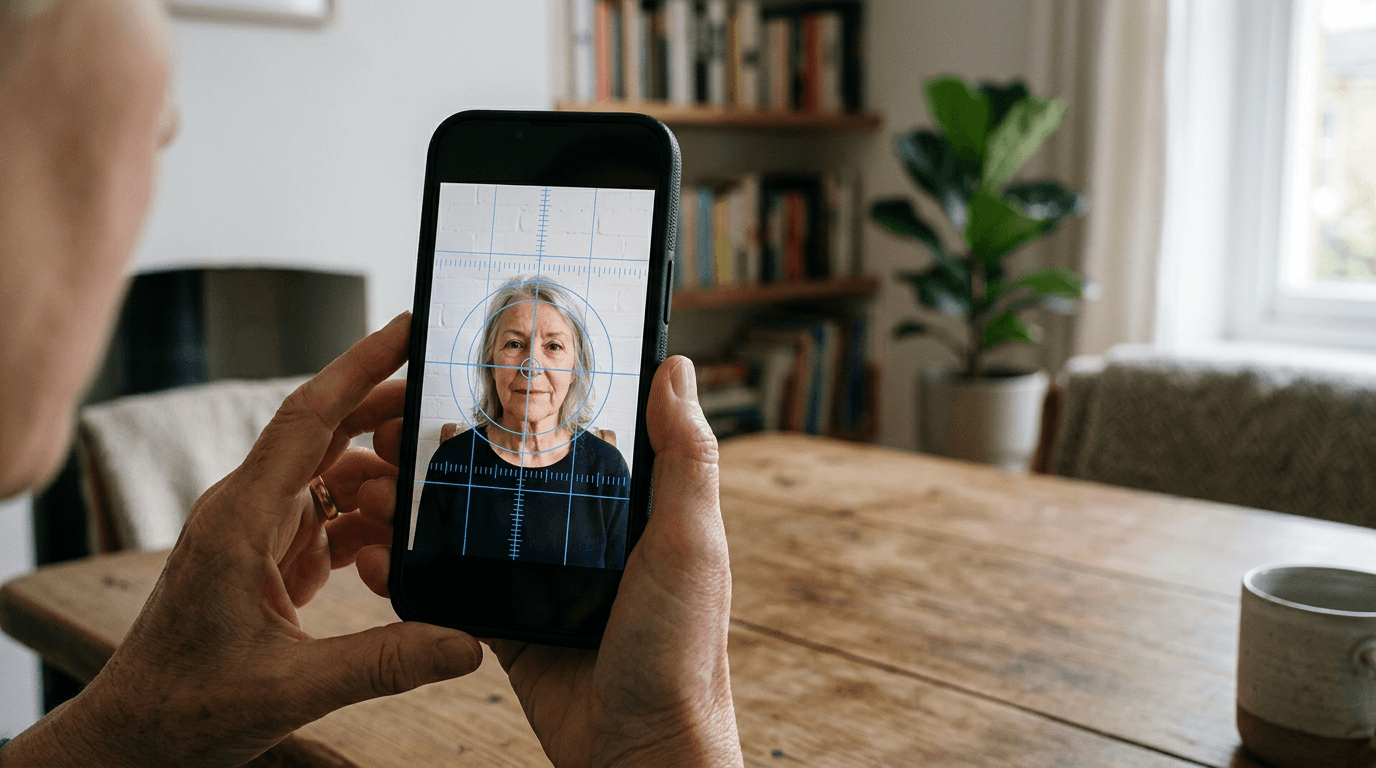
Waiting in a brightly lit pharmacy aisle while an associate pulls down a white window shade to photograph a newborn often ends in a rejected application. Families navigating strict biometric guidelines - like the precise 25-35 mm head sizing required for a United States baby passport photo - routinely try to balance application compliance against the sheer expense of repeating the process. When evaluating the cheapest place for passport photos, applicants quickly discover that the upfront price tag rarely accounts for the hidden costs of physical travel, mandatory appointments, or purchasing separate digital files for online renewals. Finding the right vendor means looking past the sticker price and examining exactly how the image is captured, verified, and delivered.
Quick Summary
Evaluating where to have biometric document images captured requires comparing retail store convenience against digital verification tools. While physical prints at a pharmacy provide immediate hard copies, online processing systems increasingly offer guaranteed compliance checks that prevent costly application delays.
- In-store retail pharmacy options bundle quick physical printing but often charge extra for digital files.
- Shipping and postal centers offer walk-in convenience but suffer from franchise-specific pricing variations.
- Digital and AI processing tools shift the photography to your smartphone, offsetting the initial effort with rigid compliance guarantees.
- The overall cost always depends on whether your application requires a hard copy, a digital file, or both.
Table of Contents
- Buying Guide / How to Choose
- 1. Walmart Photo Center
- 2. Walgreens Photo
- 3. CVS Photo
- 4. FedEx Office
- 5. The UPS Store
- 6. USPS
- 7. PhotoAiD
- The Urgency of Your Application Determines Your Best Choice
- Recommended Reads
Buying Guide / How to Choose
When determining where to get good passport photos, families must decide if they prefer an associate handling the camera or specialized software evaluating their own smartphone shots. Understanding who operates the backend infrastructure helps clarify why different models price their services so erratically. We classify these vendors into three distinct categories across a primary Operational Model axis:
- Walk-in Retail Pharmacy: Locations prioritizing immediate physical printing using a standard point-and-shoot camera, often treating digital files as a premium upsell.
- Shipping and Postal Centers: Logistics hubs that merge document photography with expedited application shipping, frequently operating under localized franchise rules.
- Digital and AI Processing: Remote software systems that analyze user-captured images against global biometric databases before issuing printable templates or digital files.
| Product | Operational Model | Features | Pros | Cons | Target Audience |
|---|---|---|---|---|---|
| Walmart Photo Center | Walk-in Retail Pharmacy | In-store and online printing, 18-month storage deletion | $0.16 online prints, 1-hour pickup, No appointment | 18-month deletion, No compliance checks, DIY formatting | Budget-conscious adults |
| Walgreens Photo | Walk-in Retail Pharmacy | In-store photography, Minilab printing | Walk-in access, Free email digital copy, Same-day pickup | No online upload, Physical presence required, Variable associate skill | Quick physical and digital backup seekers |
| CVS Photo | Walk-in Retail Pharmacy | Kodak Moments ID System | Hardware verification, Automated dimension checks, Walk-in | $3.99 digital upcharge, High base cost, In-person only | Applicants fearing biometric rejections |
| FedEx Office | Shipping and Postal Centers | RushMyPassport partnership, USB digital file | Expedited shipping integration, Walk-in access, USB option | No email delivery, Requires legacy USB-A ports, Moderate cost | Urgent travelers needing expedited shipping |
| The UPS Store | Shipping and Postal Centers | Independent franchise photography | Canadian sizes available, Local neighborhood access, Walk-in standard | Franchise price variance, No digital copy, Appointments needed for foreign sizes | Applicants needing localized foreign formats |
| USPS | Shipping and Postal Centers | Government postal clerk capture | Official federal environment, USB options for renewals, Standardized prints | Rigid 15-minute blocks, Hard to schedule families, No digital walk-ins | First-time applicants combining tasks |
| PhotoAiD | Digital and AI Processing | AI background removal, Expert manual review | Double money-back guarantee, At-home capture, Digital templates | Requires good source lighting, Relies on user hardware, No physical print included | Parents photographing uncooperative infants |
1. Walmart Photo Center
Operating within the Walk-in Retail Pharmacy category, this vendor serves as a dual-path printing infrastructure that allows budget-conscious applicants to bypass traditional studio fees if they are willing to manage their own files.
Securing a standard in-store 2x2-inch printed passport photo costs $7.64 at the retail counter. However, travelers routinely leverage standard printing infrastructure to drive costs down. Because standard 4x6-inch photo prints ordered online cost approximately $0.16 per print, an applicant can format a composite image featuring two 2x2 squares on a single 4x6 grid using external software, upload that file, and retrieve the print an hour later. This approach shifts the cropping and biometric framing burden entirely to the user. We would hesitate to rely on this workflow when preparing documents for infants, where precise head-to-chin ratios are difficult to eyeball on a homemade grid without consulting a photography help center to verify lighting parameters. Furthermore, long-term asset management requires local backups; Walmart Photo accounts actively delete stored photos if a customer has not made a purchase within 18 months, purging historical travel files.
Low print costs require managing your own digital assets
The rigid 18-month account deletion policy acts as a hard boundary for applicants trying to centralize their family's travel documents in a single cloud repository. If you rely on the retailer's infrastructure to house biometric images for future visa applications, those digital records will vanish following a year and a half of transactional inactivity, forcing a complete recapture of the subject.
Practical rule: Always print multiple backup sheets of a 4x6 composite file immediately, as retrieving archived files from retail servers after a year of inactivity is impossible.
Select this printing method when updating a single adult travel document and maximizing budget is the strict priority over automated compliance.
Pros
- Costs roughly sixteen cents when formatted independently on a standard print grid.
- Prints are typically ready for physical pickup in under one hour.
- No appointments are required to utilize the self-service online portal or kiosk.
Cons
- Accounts systematically wipe uploaded photography after 18 months of inactivity.
- Walmart passport photo services at the counter lack automated compliance guarantees.
- Formatting the image to strict federal dimensions is entirely the customer's responsibility.
2. Walgreens Photo
Operating as a staple Walk-in Retail Pharmacy, this location caters to applicants who require an immediate hard copy of their document alongside a secure digital backup.

Appointments are not required. Customers simply arrive and request an associate to capture the image against a pull-down screen. Walgreens passport photos cost $16.99 for two printed copies. Uniquely, this transaction includes a free digital copy sent directly via email. The workflow relies entirely on physical processing. This means the service is a walk-in, in-store only offering. There is no distinct option to order or upload pre-captured images online. Once the shutter clicks, standard photo prints are routed through the minilab for same-day pickup. They are often ready in as little as one hour. Target this specific counter if replacing a lost document requires both an uploaded file for a digital portal and a physical backup for the physical application package. This path avoids paying twice for the privilege.
Immediate digital delivery balances the retail premium
The total lack of an online processing portal forces every applicant to physically travel to a retail location to capture their image. You cannot format a compliant photo at home and funnel it into their specific biometric verification pipeline; the entire procedure is locked behind standing in the store and relying on the shift associate's camera handling.
This retail tier makes sense for travelers who want a physical print immediately while securing a digital file without paying separate secondary fees.
Pros
- The base price bundles both printed squares and an emailed digital file.
- Fast minilab turnaround enables same-day pickup in under an hour.
- The walk-in system requires absolutely no advance scheduling or time blocks.
Cons
- Customers cannot upload their own photos online for professional compliance review.
- The physical environment often presents harsh overhead fluorescent lighting.
- Results rely heavily on the visual judgment of whichever retail associate is on duty.
3. CVS Photo
Functioning within the Walk-in Retail Pharmacy category, this in-store printing counter targets applicants who want to eliminate the guesswork of biometric framing through automated hardware checks.
The base processing fee here runs $17.99. This covers two 2x2-inch printed ID photos. It establishes the service at the higher end of the standard retail tier. CVS avoids relying purely on an associate's visual judgment. Instead, it utilizes the Kodak Moments Passport & ID Photo System. This system captures and automatically verifies compliance with strict government standards before the printer ever engages. While reviewing the software terms and conditions, you will notice this physical infrastructure demands physical presence. Photos must be taken in-person in the store. There is no option to upload pre-existing images or order the specialized format online. If an applicant needs the resulting file for an online submission, they can choose to receive an additional digital photo copy. It is delivered via email for an extra $3.99. Skip this specific location if processing a large family. Applying that nearly four-dollar surcharge to four separate people rapidly inflates the afternoon's budget.
Hardware verification removes submission guesswork
The aggressive upcharge for digital asset delivery severely damages the inherent value of the package for modern online applicants. Shelling out almost twenty-two dollars to walk away with a basic physical print and an emailed jpeg pushes this vendor out of the budget-friendly category and into a premium bracket that it does not operationally justify.
Opt for this hardware-verified approach if application rejections are a major concern and securing an emailed file is worth a moderate localized surcharge.
Pros
- The integrated Kodak system automatically checks facial positioning and dimensional compliance.
- Immediate walk-in availability removes the friction of advance scheduling.
- On-site printing delivers hard copies immediately after the hardware verifies the shot.
Cons
- Obtaining a digital file demands a $3.99 premium on top of an already high base rate.
- The system outright rejects pre-captured images submitted through an online portal.
- The final cost per person scales poorly when outfitting a multi-member household.
4. FedEx Office
As a hybrid Shipping and Postal Centers operator, this venue caters to travelers looking to execute their photography and document dispatch at the exact same counter.

This logistical hub operates purely on a walk-in basis, meaning no appointment is needed for in-store services at these locations. Rather than defaulting to a standard physical print, customers can explicitly choose to receive a digital passport photo copy loaded directly onto a physical USB drive for $15.95. The primary mechanical advantage of this venue lies in its operational backend; FedEx Office has partnered with RushMyPassport to provide expedited application preparation and tracking services directly from the retail floor. By tying the camera capture to the physical shipping container, the facility minimizes the time between taking the photo and putting the application into the logistics network. We would lean heavily into this specific branch when an upcoming international flight is less than three weeks away and standard postal transit times pose a catastrophic risk to the itinerary.
Logistics integration speeds up urgent applications
Delivering a digital file exclusively on a physical USB drive introduces a severe hardware bottleneck for users operating modern tablets, ultra-thin laptops, or smartphones. If your primary computing device lacks a legacy USB-A port, accessing the $15.95 digital file requires tracking down a third-party adapter just to upload the image to a government renewal portal.
Travelers facing imminent departure dates should leverage this integrated counter to merge their biometric photography directly into an expedited paperwork shipping workflow.
Pros
- Direct integration with RushMyPassport accelerates the physical mailing timeline.
- Providing digital files on a USB drive entirely bypasses internet email limits.
- Walk-in availability ensures no delays while waiting for available time slots.
Cons
- The USB drive delivery format is incompatible with modern mobile-first hardware.
- Utilizing the expedited logistics network drastically increases the total transaction price.
- There is no direct cloud or email delivery mechanism for the resulting digital image.
5. The UPS Store
Operating as a sprawling Shipping and Postal Centers franchise, this brand serves local neighborhood applicants who prioritize close-to-home convenience over centralized corporate pricing models.
Because the underlying business relies on independent operators, a standard set of two printed 2x2-inch photos generally costs $11.99 at participating locations, but pricing can vary up to $13.99 depending entirely on the local owner's discretion. Understanding what passport pictures cost at a franchise requires calling your local branch directly. The standard walk-in photo service here acts as a purely analog transaction, as it does not include a digital copy of the photo whatsoever. One distinct technical advantage is that select locations can capture a Canada baby passport photo - which requires radically different dimensions than the standard US format - though an appointment may be required for non-US specifications to ensure the right camera template is loaded. We would bypass this specific counter when executing an online US renewal, simply because walking away without a digital file forces an awkward flatbed scanning process later in the day.
Franchise independence causes cost and service variance
The total absence of a digital delivery tier immediately disqualifies this vendor for any traveler utilizing web-based application portals. If the receiving consulate or government agency requires a jpeg upload rather than a stapled hard copy, you will leave this franchise with a physical square of paper that you cannot practically use without degrading its quality through a secondary scanner.
Local applicants requiring specialized international formats, like Canadian dimensions, will find the necessary template equipment here after scheduling an appointment with the franchisee.
Pros
- Franchise locations frequently possess templates for strict non-US passport dimensions.
- The neighborhood footprint reduces the travel burden compared to centralized postal hubs.
- Standard domestic photo requests do not require booking ahead of time.
Cons
- Franchise independence causes base pricing to fluctuate notably between nearby zip codes.
- The transaction yields absolutely no digital file for online renewal portals.
- Capturing non-standard international sizing routinely requires advance phone scheduling.
6. USPS
Acting as the foundational entry in the Shipping and Postal Centers category, this independent government agency provides photo services at select retail locations specifically for applicants finalizing their official paperwork directly at the source.
Securing a compliant image directly from the postal clerk carries a flat fee of $15.00 for printed photos. The operational flow here is highly rigid; individual appointments for photo services take approximately 15 minutes per person and must be booked in advance. While USPS does not schedule appointments for passport renewals generally, select locations now offer digital photo services on a USB drive explicitly to support online renewals. This creates a bifurcated system where in-person application routing is disjointed from the digital capturing schedule. We would book this precise government counter when a minor's first-time application requires both parents to swear an oath before an agent, allowing the family to knock out the photography and the legal attestation in a single fifteen-minute time block.
Direct government processing demands rigid scheduling
The strict 15-minute time blocking mechanism destroys the flexibility required to process a multi-person household efficiently. A family of four cannot simply walk in and queue; they must successfully secure a full continuous hour of consecutive 15-minute appointments, a logistical hurdle that is notoriously difficult to achieve during standard operating hours.
Practical rule: Do not attempt to stack consecutive appointment blocks for multiple family members online; call the branch directly to lock down a continuous hour of physical counter time.
Routing the photography through a local postal location streamlines the workflow for first-time applicants who must appear before an official federal agent regardless.
Pros
- The capture process occurs in the exact same facility executing the legal attestation.
- Pricing is federally standardized, avoiding the fluctuation seen in local franchises.
- Select branches actively support USB-based digital delivery for remote renewals.
Cons
- Mandatory 15-minute appointments severely constrain daily schedule flexibility.
- Grouping consecutive appointments for an entire family is exceptionally difficult.
- Standard in-person renewals cannot be scheduled alongside the photography session.
7. PhotoAiD
Functioning as a dedicated Digital and AI Processing tool, this platform targets applicants who are entirely comfortable capturing their own raw images from home using a standard modern smartphone.
Instead of charging for physical camera operation, the platform monetizes the verification layer. When absorbing the passport photo online cost, obtaining a digital file and a printable template sent via email costs $16.95. Once a user uploads a raw portrait, the system applies AI and expert manual verification to automatically strip the background, center the subject, and verify dimensional compliance. To mitigate the inherent anxiety of self-shot images, the service provides a 100% refund policy if official government authorities reject the photo during the application review. We would lean heavily into this algorithmic workflow when dealing with infants or toddlers, as taking forty rapid-fire pictures on a living room rug is vastly less stressful than forcing a crying child to sit still under harsh pharmacy fluorescent lights.
Algorithmic verification shifts the compliance burden
The software's capacity to forcefully remove backgrounds and adjust digital lighting cannot ultimately rescue a source image captured from a fundamentally incorrect angle or plagued by heavy facial shadows. If the user fails to stand facing a natural light source, the AI cannot reconstruct the lost biometric data, placing the initial quality control burden squarely on the amateur photographer.
Remote digital processing perfectly fits parents who prefer capturing multiple smartphone takes of a subject at home rather than braving a restrictive public studio environment.
Pros
- A double money-back guarantee secures the investment against government rejection.
- Remote capture drastically reduces stress when photographing squirming toddlers.
- Hybrid human and AI verification ensures rigid adherence to dimensional compliance.
Cons
- The system relies entirely on the user possessing a high-quality smartphone camera.
- Poor ambient lighting at home cannot be fully corrected by backend processing.
- The purchase delivers only digital files, requiring external printing solutions if hard copies are needed.
The Urgency of Your Application Determines Your Best Choice
Matching the correct vendor to your specific timeline relies directly on which operational model you select. Understanding where your bottleneck lies dictates the smartest processing choice.
If immediate physical hard copies are your absolute priority, the Walk-in Retail Pharmacy model operates as the most resilient choice. A localized pharmacy counter allows you to walk in without scheduling conflicts and leave an hour later with trimmed, printed squares ready for stapling.
When timeline constraints demand wrapping the entire process into a single logistical errand, the Shipping and Postal Centers model proves superior. Tying your camera time directly to an expedited shipping container or an official government oath removes transit delays, though you must navigate restrictive appointment scheduling.
Finally, if securing guaranteed compliance for an online upload is your primary hurdle, relying on the Digital and AI Processing category shifts the heavy lifting off your shoulders. Submitting smartphone photos to algorithmic verification layers ensures dimensional accuracy without ever forcing a household to commute to a physical retail counter.