7 Places to Get Passport Photos in 2026: Trade-Offs and Limits
You are standing near the greeting card aisle at a local pharmacy, holding a squirming six-month-old under harsh fluorescent lights, while a retail clerk attempts to pull down a wrinkled white screen and operate a digital point-and-shoot camera. It is a specific kind of stress familiar to any traveling parent. When preparing for an international trip, finding places to get passport photos is often treated as an afterthought. However, the physical location you choose dictates the equipment used, the training of the person behind the camera, and ultimately, whether the State Department accepts or rejects your application.
Quick Summary
Choosing a location for passport and visa photography requires balancing convenience, technical compliance, and the subject's ability to follow directions. Different venues utilize entirely different equipment and operational standards.
- Retail pharmacies offer walk-in convenience but struggle with non-standard requirements like infant photography.
- Professional studios provide superior lighting and posing control at a significantly higher cost.
- Post offices act as one-stop processing centers but frequently suffer from severe appointment bottlenecks.
- Evaluating the physical setup before committing saves both time and application rejection fees.
Table of Contents
- Evaluating the Photography Environment
- 1. Retail Pharmacies
- 2. Shipping and Postal Centers
- 3. United States Postal Service Facilities
- 4. Professional Photography Studios
- 5. Membership Clubs and Auto Associations
- 6. Dedicated Expedited Passport Agencies
- 7. University and Local Government Clerk Offices
- Aligning the Location to Your Application
- FAQ
- Recommended Reads
Evaluating the Photography Environment
Not all passport photo locations are equipped to handle every applicant. The primary lens for evaluating these venues is their technical consistency and their capacity for edge cases - specifically infants, toddlers, and foreign visa applications requiring non-standard dimensions. A venue that excels at photographing a cooperative adult renewing a standard US passport may fail entirely when tasked with capturing an infant who cannot sit up independently, or when adjusting their cropping software for a 35x45 mm European specification. Every location below is judged against this threshold of operational flexibility and environmental control.
1. Retail Pharmacies
Retail pharmacy chains like CVS and Walgreens are the most ubiquitous options for standard applicant photography. They cater to adults and older children who need a quick, walk-in service without scheduling an appointment.
These locations utilize a standardized, highly constrained mechanism. A store clerk pulls down a white projector screen, usually situated at the end of a retail aisle, and uses a basic digital camera to capture the image. The camera is typically tethered to a proprietary kiosk that features a built-in biometric overlay. The clerk aligns the subject's face within an oval on the touchscreen to ensure the head measures between 1 and 1 3/8 inches, as required by the State Department. The image is then printed on standard glossy photo paper using a dye-sublimation printer behind the counter.
Accessible but operationally inconsistent
The honest limit of the retail pharmacy is its complete lack of environmental control and specialized training. The lighting is unmitigated overhead fluorescent, which frequently casts harsh downward shadows beneath the eyes and chin - a common reason for biometric rejection. More critically, these locations are poorly equipped for infants. The clerks are retail employees, not photographers, and the physical setup assumes a subject who can stand still at a specific distance from the screen. If you are a parent trying to hold a baby up without your hands showing in the frame, the pharmacy kiosk software will almost certainly flag the image. Furthermore, if you require specific international sizing, such as what is outlined in the Canada Baby Passport Photo Guide, retail systems are rarely calibrated to print anything other than the standard 2x2 inch US format.
2. Shipping and Postal Centers
Franchise shipping centers like The UPS Store or FedEx Office provide auxiliary photography services alongside their primary printing and logistics operations. They are designed for business travelers and individuals executing administrative tasks during regular business hours.
The operational mechanism closely mirrors that of retail pharmacies. However, it is situated in a slightly more controlled environment. Because these stores are dedicated to document processing rather than high-traffic retail sales, the photo backdrop is often permanently mounted in a designated corner rather than pulled down in a busy aisle. Staff members use a digital camera. They process the image through specialized identification software on their desktop computers. This software runs automated compliance checks against common brightness and contrast thresholds before sending the file to a commercial-grade photo printer.
Fast transaction, basic compliance
These centers offer a quieter environment but use rigid software templates. They work well for a lone adult needing a standard renewal. They fail with strict, non-US biometric rules. Many franchise locations outright refuse to photograph newborns. Staff cannot spare twenty minutes for sleeping infants. If you are researching where to get passport style photos for a complex foreign visa, relying on a shipping center clerk to manually adjust the crop ratios in their basic point-of-sale software is a high-risk strategy that frequently ends in embassy rejection.
Practical rule: If a physical location requires the subject to support their own head and neck to align with the camera, it is an automatic non-starter for infant passport photography.
3. United States Postal Service Facilities
Select USPS locations function as official passport acceptance facilities, offering photography as an add-on service to the application adjudication process. This route is intended for first-time applicants, minors, and those who must apply in person and wish to handle the paperwork and the photo in a single transaction.
The mechanism is heavily regulated. The postal clerk capturing the image is the same certified agent who executes the DS-11 application form. They use a standardized digital camera setup and are acutely aware of the immediate reasons an image might be rejected. Because they adjudicate the application on the spot, they act as an immediate gatekeeper; if the lighting is poor or the subject is not looking directly at the camera, the clerk will force a retake before sealing the application envelope.
The one-stop bottleneck
Severe availability constraints and intense time pressure dominate the postal service route. Photography services are almost exclusively tied to passport processing appointments, which are notoriously difficult to secure in metropolitan areas. You cannot simply walk in for a photo. Furthermore, postal clerks operate on strict 15-minute appointment windows. If your child is uncooperative, crying, or asleep, the clerk does not have the scheduling flexibility to wait. You will be asked to leave, forfeit your appointment, and start the scheduling process over. For an overview of how strict these physical requirements are, reviewing the United States Baby Passport Photo Guide highlights why attempting this in a rushed postal environment often fails.
4. Professional Photography Studios
Independent photography studios and portrait centers offer bespoke identification photography. This option is utilized by applicants who have previously faced rejections, expatriates needing precise foreign visa dimensions, or parents who want guaranteed compliance for a difficult-to-photograph infant.

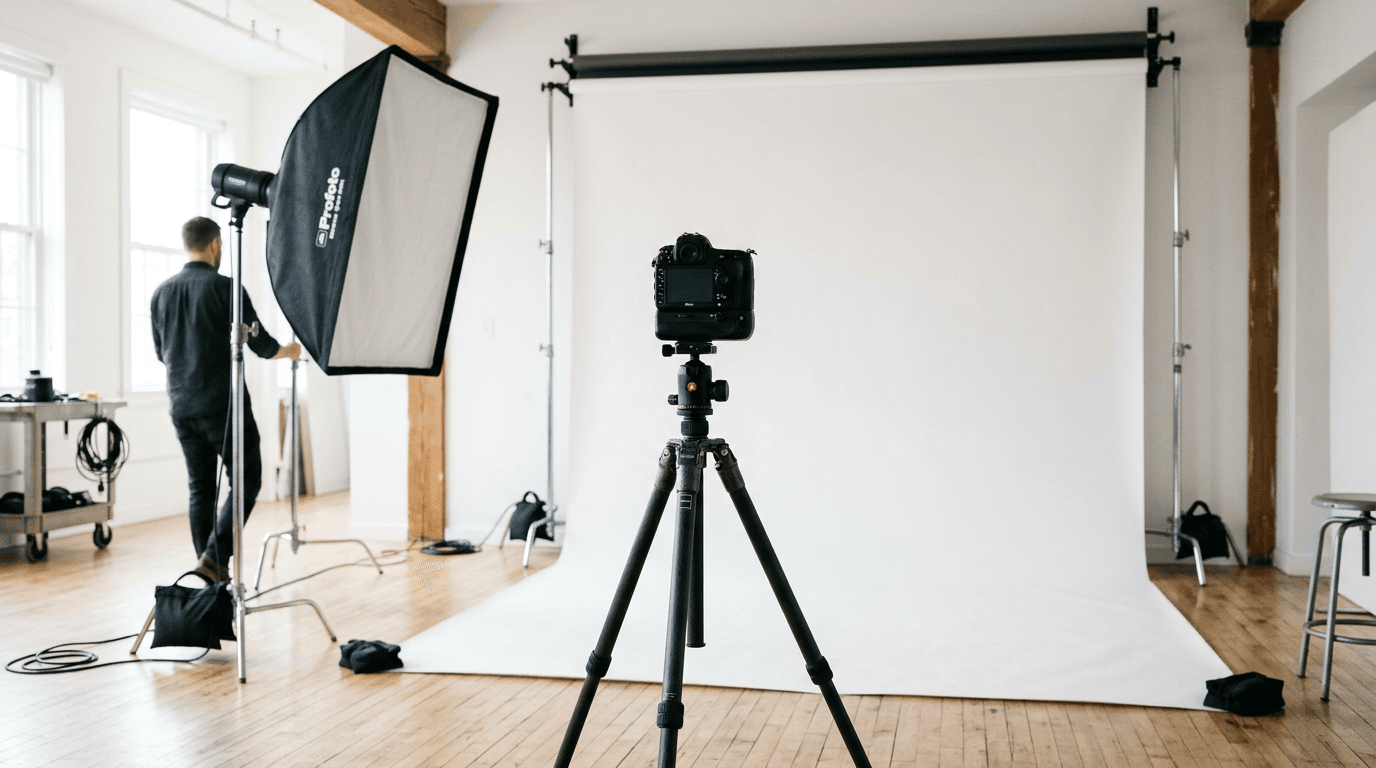
The mechanism relies on professional-grade hardware and environmental manipulation. Photographers use DSLR or mirrorless cameras with off-camera strobe lighting and softboxes to completely eliminate background shadows and illuminate the face evenly. Unlike retail kiosks, professional studios do not rely on automated cropping templates. The photographer manually adjusts the focal length, poses the subject, and processes the raw image file through professional editing software to ensure the exact millimeter measurements from the chin to the crown of the head match the destination country's regulations.
High technical control at a premium
The trade-off here is steep financial cost and logistical friction. A professional studio will charge three to five times what a pharmacy charges for a set of prints. Additionally, studios operate on appointment schedules and rarely accommodate urgent, same-day walk-ins. They are overkill for a standard adult US passport renewal. However, when figuring out who takes passport photos that meet obscure international standards or when a family cannot risk the financial penalty of a rejected visa application, the studio environment provides the only reliable offline safety net.
5. Membership Clubs and Auto Associations
Organizations like AAA (American Automobile Association) and certain wholesale membership clubs offer identification photography as a member benefit. This service targets frequent drivers, travelers, and families looking to consolidate their errands.
The physical mechanism is practically identical to shipping centers: a fixed white background, a point-and-shoot camera, and automated processing software. The distinguishing operational feature is the pricing structure and staff pacing. Because this is a subsidized member perk rather than a primary revenue stream, the staff often have slightly more time to attempt a retake if the first image is inadequate.
Reliable perks with restricted access
Membership gates block open access to these services. If you are not a paying member, you cannot use the service, or you will be subjected to exorbitant non-member walk-in fees. Additionally, these centers are heavily geared toward standard domestic travel. If you bring in a printed specification sheet from a foreign consulate detailing a required grey background instead of a white one, the membership club will not have the physical backdrop to accommodate the request. They are reliable for domestic renewals but structurally incapable of adapting to varied biometric demands.
6. Dedicated Expedited Passport Agencies
Private expediting companies (often located in major cities near foreign consulates or federal passport agencies) provide end-to-end rush services. Their photography offerings are aimed exclusively at desperate travelers who need to secure travel documents within 24 to 48 hours.
The operational mechanism is built purely for speed and federal compliance. These agencies know the exact preferences of the federal agents processing the paperwork blocks away. They use standardized digital setups but possess a high degree of manual oversight, as a rejected photo would invalidate their exorbitant expediting fees. The staff capture, crop, and print the images within minutes, directly attaching them to rush application packets.
Urgent processing, aggressive pricing
These agencies should be skipped by anyone not in an active travel emergency. The cost of the photograph is often bundled into expediting fees that run into the hundreds of dollars. Furthermore, their physical locations are limited to major metropolitan hubs. If you are searching for a "passport photograph near me" in a suburban or rural area, expedited agencies simply do not exist. They are a specialized tool for a specific crisis, not a routine solution for family travel preparation.
7. University and Local Government Clerk Offices
Many university study-abroad offices and local county clerk or municipal court buildings offer passport photography. These venues serve students preparing for international semesters and local residents executing municipal paperwork.
The mechanism is highly localized. A designated administrative clerk uses a basic digital camera setup, often in a quiet office rather than a public lobby. Because the volume of applicants is significantly lower than at a retail pharmacy or a post office, the environment is calmer. The clerk processes the image using standard government-approved cropping software and prints it on-site.
Quiet alternatives with limited hours
Restricted access and narrow operating hours restrict the utility of these official locations. University centers frequently restrict their services to enrolled students and faculty. County clerk offices operate strictly on municipal schedules, meaning they are closed on weekends and federal holidays, making them inaccessible for working parents. Furthermore, like the USPS, they are rigidly tied to US standards. If you need to understand the nuances of international sizing, consulting resources like the US & International Baby Passport Photo Requirements & Guides will reveal that municipal clerks lack the software to generate compliant foreign visa photos.
Practical rule: Always verify the exact background color required by your destination country before visiting a physical location; most US-based physical centers only possess white backdrops, which will cause immediate rejection for countries requiring grey or blue.
Aligning the Location to Your Application
Selecting the right venue depends entirely on the subject being photographed and the specific requirements of the destination government.
If you are an adult renewing a standard US passport and your primary bottleneck is time, retail pharmacies and shipping centers provide the necessary speed and walk-in availability. If you are applying for your first passport and need to execute the paperwork simultaneously, securing an appointment at a USPS facility consolidates the administrative burden into a single trip.
However, if your bottleneck is technical compliance - specifically when dealing with infants, toddlers, or strict foreign visa dimensions - the standard retail and postal options break down. The lack of environmental control, the inability to pose an infant safely, and the rigid software templates lead to high rejection rates. In these scenarios, parents must either absorb the high cost and scheduling friction of a professional photography studio or utilize specialized digital tools designed to enforce biometric compliance from home. Understanding the limitations of these physical passport photo centers ensures you do not waste time and money on images that will ultimately fail federal adjudication.
FAQ
What are the most common places to get passport photos?
The most common locations include retail pharmacies, shipping centers, post offices, and professional photography studios. Each offers different levels of convenience and technical control.
Can I use passport photo locations for foreign visa applications?
Most standard retail and postal locations are only equipped to print the 2x2 inch US format on a white background. If your foreign visa requires different dimensions or a different background color, standard locations will likely fail to meet the requirements.
Who takes passport photos for infants and newborns?
While pharmacies and post offices technically offer the service, they frequently struggle or refuse due to the difficulty of posing an infant. Professional studios or specialized digital compliance tools are the most reliable methods for infant photography.
How do I find a reliable passport photograph near me?
Search for local shipping centers or pharmacies for standard adult renewals. For complex cases or infants, search specifically for professional portrait studios or utilize dedicated online compliance platforms.
Do passport photo centers guarantee their photos will be accepted?
Physical retail locations rarely offer a meaningful guarantee beyond a simple reprint. If the State Department rejects the photo, you are typically responsible for the delays and the cost of acquiring a new image.