Biometric Passport Photo Standards: Travel Document Requirements for 2026
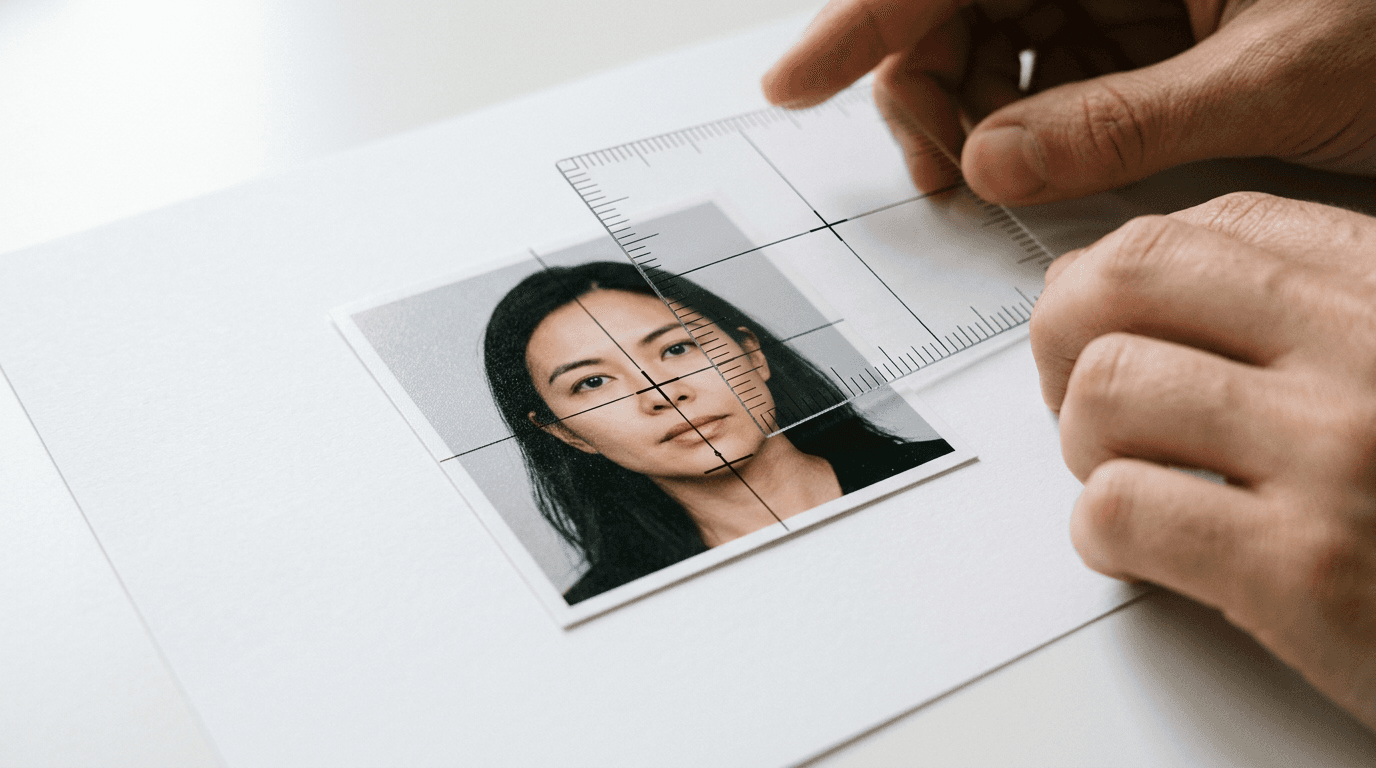
A parent opens a passport agency envelope expected to hold a newborn's travel document, only to find a rejection letter citing a "background shadow" that the human eye barely registers. In 2026, government processing facilities do not look at your child's picture; they feed it through an algorithm that maps facial geometry against strict tolerances. A biometric passport photo is a data set disguised as a portrait. When the distance between the eyes is obscured by poor lighting, or the chin-to-crown ratio falls outside the mandatory 25 - 35 mm range, the image fails the machine check. Understanding exactly what the scanner measures is the only way to avoid the costly delays of document rejection.
Quick Summary
A biometric passport photo is a standardized facial image optimized for algorithmic mapping and facial recognition systems. Securing approval requires strict adherence to international civil aviation specifications governing lighting, resolution, and facial geometry.
- Resolution minimums: Authorities require a clean 300 DPI scan to prevent pixel interpolation errors.
- Geometric constraints: The head must measure precisely 25 to 35 mm from the chin to the crown of the head.
- Infant exceptions: While eyes must be open, minor variances in infant gaze are tolerated if the facial structure is evenly illuminated.
- Contrast demands: Backgrounds must provide total separation from the subject without casting edge shadows.
Table of Contents
- Why physical prints still trigger biometric failures
- What the facial recognition algorithm actually measures
- How infant physiology breaks standard photo guidelines
- Where home lighting sabotages a biometric passport in the USA
- Why automated background removal fails without proper contrast
- When to reject your own photo before submitting it
- FAQ
- Recommended Reads
Why physical prints still trigger biometric failures
The assumption that a clear digital file guarantees a compliant physical print is the most common point of failure in modern passport applications. Government scanners digitize physical prints at high speeds, and the hardware is highly sensitive to the medium itself. When a parent uses a standard home inkjet printer, the ink droplets spread into the paper fibers, creating micro-blurring along the sharp edges of the jawline and eyes. To the human eye, the print looks acceptable; to a biometric scanner, the facial edge is fuzzy, triggering an automatic rejection for lack of sharpness.
Furthermore, the physical handling of the photo introduces risks that digital files bypass entirely. A fingerprint smudge on the glossy surface of a printed photograph creates a microscopic glare point when passed under the agency's scanner. If this glare lands on a pupil or the bridge of the nose, it disrupts the software's ability to measure the interpupillary distance. This is why following a dedicated United States Baby Passport Photo Guide emphasizes printing on high-quality, continuous-tone dye-sublimation printers at commercial pharmacies, rather than risking at-home inkjet hardware.
Even when printed professionally, compression artifacts from the original digital transfer can surface. If an image is transmitted via a messaging app that down-samples the file to save bandwidth, the resulting file may lack the data density needed for a true 300 DPI print. The commercial printer will interpolate the missing pixels, creating a "stair-step" effect on diagonal lines like the edge of a cheek.
What the facial recognition algorithm actually measures
Government biometric scanners operate on the standards defined by the International Civil Aviation Organization (ICAO) Document 9303. The machine does not assess whether a photograph is a good likeness; it maps specific nodal points on the face to create a mathematical template. The foundational measurement is the interpupillary distance - the exact space between the centers of the pupils. If the head is tilted even slightly off the vertical axis, or if the camera was held too close, causing lens distortion (the "fisheye" effect), this distance is artificially altered, and the photo fails.

Practical rule: Always shoot the photo from a distance of at least 1.5 meters (5 feet) using optical zoom rather than getting closer to the subject, which prevents the nose from appearing artificially enlarged and disrupting the facial map.
The algorithm also heavily relies on the "Golden Triangle" formed by the eyes and the base of the nose. For the scanner to register these points accurately, the contrast between the facial features and the skin must be distinct. This is why glasses - even those without tinted lenses - are categorically banned for US applications; the frames cast shadows that create false edges, and the lenses create glare that obscures the pupils. Checking international US & International Baby Passport Photo Requirements & Guides reveals that virtually all jurisdictions now enforce this strict no-glasses policy to protect the algorithmic mapping of the eye area.
Additionally, the vertical positioning of the head is strictly policed. The measurement from the bottom of the chin to the top of the head (excluding hair) must fall within the 25 - 35 mm range on a standard 2x2 inch print. If the head is too small, the scanner lacks the pixel density to map the nodal points. If the head is too large, the software cannot establish the necessary background reference points to isolate the face.
How infant physiology breaks standard photo guidelines
Photographing an infant for biometric compliance presents a unique set of mechanical challenges that standard photography setups fail to address. A newborn lacks the neck control to sit upright in front of a white wall. The common workaround - laying the baby flat on a bed - introduces immediate geometric distortions. When a baby lies on their back, gravity pulls the facial tissue backward, subtly altering the shape of the jawline and cheeks compared to an upright posture. While algorithms tolerate some variance here, the angle of the camera relative to the face must remain perfectly parallel to the floor.
A more frequent failure occurs via the "invisible hand." Parents attempting to support a sitting infant often drape a white cloth over their own arm, holding the child from behind. The fabric invariably wrinkles, creating shadows that the scanner interprets as part of the subject. Alternatively, fingers accidentally creeping into the frame behind the baby's ears introduce foreign flesh tones into the background. The United Kingdom Baby Passport Photo Guide strictly prohibits any third-party hands, shadows, or support structures in the frame, treating them as biometric noise.
Infants also exhibit involuntary movements and asymmetrical expressions that complicate the mandate for a "neutral facial expression." While strict enforcement of the closed-mouth rule is relaxed for newborns, the eyes present a strict binary: they must be open and visible. A photo captured mid-blink, or where a drooping eyelid obscures the pupil, will fail the interpupillary mapping.
Where home lighting sabotages a biometric passport in the USA
Applying for a biometric passport in the USA demands absolute illumination symmetry. The single fastest way to fail the State Department's algorithmic check is uneven lighting. Most parents attempt to photograph their child near a window, assuming natural light is optimal. However, window light is inherently directional. It illuminates one side of the face while casting the opposite side into soft shadow. To the human eye, this looks like a pleasant portrait; to the facial recognition software, it looks like severe facial asymmetry. The algorithm may fail to locate the jawline on the shadowed side, resulting in a rejected application.
Overhead indoor lighting is equally destructive. Standard household ceiling fixtures cast harsh shadows directly downward. This creates heavy dark pockets under the eyebrows (obscuring the eyes), under the nose, and beneath the chin. The scanner interprets the dark shadow under the chin as the actual edge of the jaw, drastically altering the chin-to-crown measurement and violating the 25 - 35 mm rule. Reviewing the Australia Baby Passport Photo Guide shows identical lighting tolerances across allied biometric networks.
Achieving compliant flat lighting at home requires an overcast day and indirect light from multiple sources. The subject must face the light source directly, ensuring both ears and both cheeks receive the exact same lux value. If using artificial light, it must bounce off a white ceiling or wall behind the camera to diffuse the beams. Any hard shadow cast onto the background behind the ears will merge with the hair in the scanner's view, destroying the silhouette.
Why automated background removal fails without proper contrast
The rise of smartphone applications offering to swap out messy backgrounds for compliant white or off-white panels has introduced a new class of biometric failures. Background removal relies on edge-detection algorithms. When a baby wearing a white onesie is photographed on a white blanket, the contrast ratio at the edge of the shoulder drops to zero. The removal software cannot distinguish where the clothing ends and the blanket begins.
This results in "clipping" - where chunks of the subject's shoulder or hair are digitally amputated, or where jagged, artificial artifacts are left behind. Government scanners are programmed to flag digital manipulation. When they detect non-natural geometric edges resulting from a poor background cutout, the image is rejected for alteration. For a seamless extraction, the raw photo requires high tonal contrast.
Practical rule: Always dress the subject in dark, solid colors that contrast heavily with the skin tone and the temporary background, allowing edge-detection software to draw a flawless clipping path.
Different countries have specific background color requirements that complicate automated swaps. While the US mandates stark white or off-white, the Canada Baby Passport Photo Guide may require different tonal values depending on the document type, and altering the background artificially can sometimes run afoul of rules prohibiting any digital retouching of the original file.
When to reject your own photo before submitting it
Submitting a marginal photo costs weeks of processing time and forfeits the application fee. It is entirely up to the applicant to act as the first line of quality control. You must objectively evaluate the image against machine-readable tolerances, not human aesthetics. If there is any doubt regarding glare, shadows, or geometric proportions, the photo must be retaken.
The following table outlines the mechanical parameters that dictate an automatic pass or fail at the scanning facility.
| Biometric Marker | Algorithmic Requirement | Immediate Rejection Trigger |
|---|---|---|
| Interpupillary Distance | Clearly visible, unobscured pupils | Flash red-eye, glare on cornea, or hair crossing the eye. |
| Vertical Proportion | Head is 25 - 35 mm from chin to crown | Camera held too close, causing lens distortion and enlarged nose. |
| Silhouette Edge | Total separation from the background | Shadow cast on the wall merging with the subject's hair or neck. |
| Facial Symmetry | Equal illumination on both cheeks | Directional window light causing one side of the face to fall into shadow. |
| Digital Integrity | Raw pixel mapping without compression | Visible jagged edges from poor automated background removal. |
Checking these criteria rigorously is non-negotiable. For families managing multiple international requirements, consulting a Germany Baby Passport Photo Guide alongside US standards highlights that while biometric principles are universal, the exact millimeter tolerances and background hex-codes shift per jurisdiction. If the photograph fails a single check in the table above, the algorithmic scanner will reject it.
FAQ
Can I use a pacifier in a biometric photo for a crying baby?
No. Pacifiers obscure the mouth and lower jawline, preventing the facial recognition software from mapping the bottom half of the face.
Does a baby's mouth need to be completely closed?
While adult standards strictly mandate a closed mouth, biometric systems tolerate a slightly open mouth in infants, provided it does not obscure the jawline or alter the shape of the cheeks.
Why was my photo rejected for "red-eye" if I removed it with software?
Digital retouching of any kind, including red-eye removal tools, alters the pixel data of the eye. Scanners detect this manipulation and automatically reject the image; you must retake the photo without a direct flash.
Is a plain white bedsheet acceptable as a background?
Only if it is completely unwrinkled and brightly illuminated. Deep folds in a bedsheet create dark gray shadows that the algorithm interprets as foreign objects in the background.