Decoding European Biometric Standards for Infant Travel Documents
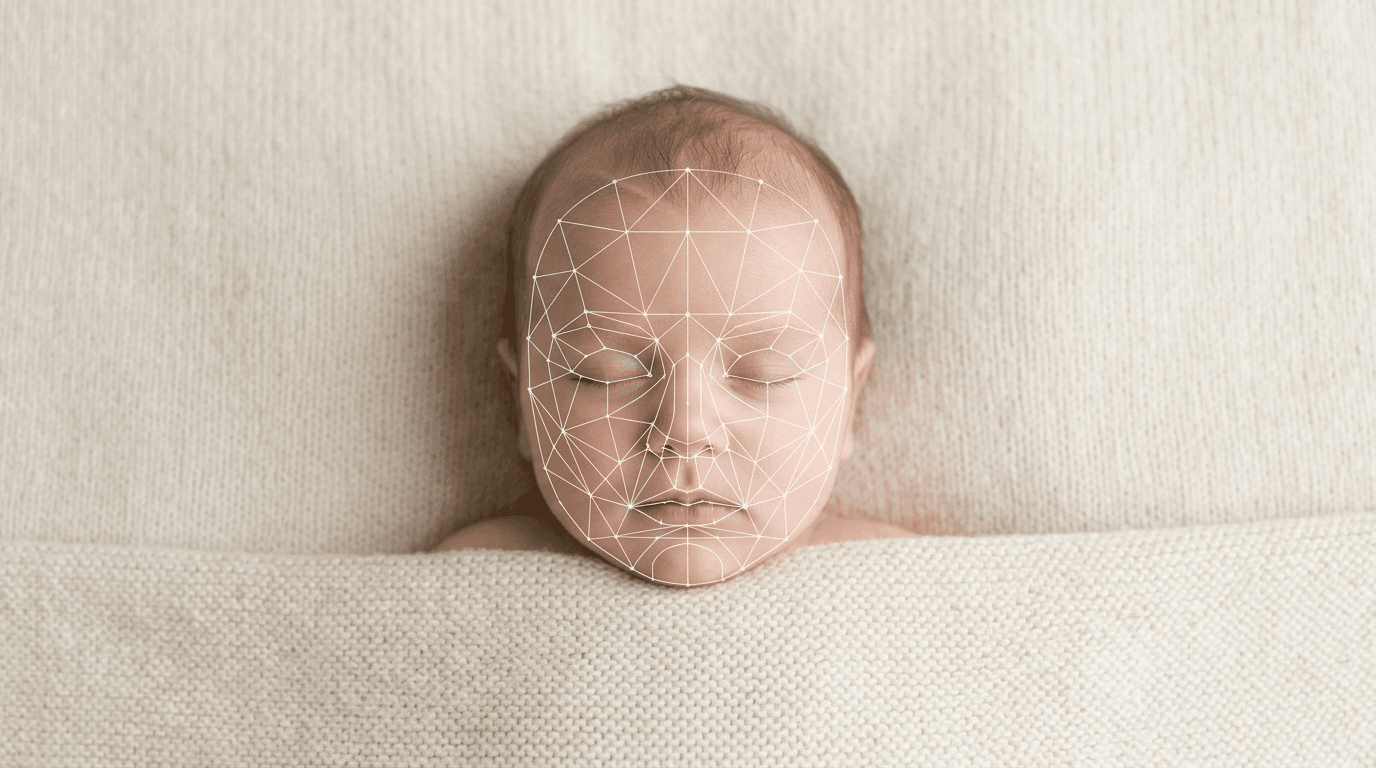
You lay your infant on a flat white bedsheet, position your smartphone directly overhead, and wait for that fleeting half-second when their eyes open and their head stops turning. When you finally capture the shot and submit the file to the consulate, it is rejected entirely due to a microscopic shadow under the right jawline. Meeting strict international biometric standards - and specifically the rigid German passport photo requirements - demands far more than just a light background and a modern smartphone camera. It requires understanding exactly how automated facial recognition software maps human geometry before a human clerk ever reviews the file.
Quick Summary
European biometric passport standards rely on edge-detection algorithms and precise geometric mapping to verify identity, a process that frequently fails when applied to the unique anatomy of infants. Navigating these parameters requires overriding smartphone camera defaults and carefully controlling ambient light.
- Standard smartphone lenses distort facial proportions; using a telephoto setting compresses the geometry to meet biometric standards.
- Infants lack neck definition, meaning parents must artificially create a jawline shadow for edge-detection algorithms to read.
- Digital submission portals assess pixel density and compression artifacts, rejecting heavily cropped smartphone images.
- Background contrast is measured mathematically; the subject must separate cleanly from the backdrop without clipping paths.
Table of Contents
- Why German passport photo requirements dictate the European baseline
- Where the biometric matrix breaks down for infants
- Navigating the Polish passport photo eye-line rules
- How Irish passport photos handle digital submissions differently
- What Italy passport photo requirements demand for background contrast
- Why Dutch passport photo requirements reject uneven lighting
- Comparison Table: European biometric tolerances
- FAQ
- Recommended Reads
Why German passport photo requirements dictate the European baseline
The European Union largely standardizes its travel documents around the International Civil Aviation Organization (ICAO) Document 9303, but German passport photo requirements represent the strictest interpretation of that framework. Because the German system utilizes highly calibrated automated scanning to pre-filter applications, a photograph that passes their matrix will almost universally satisfy neighboring jurisdictions.
The core of this standard is the 35x45mm physical frame, but the mechanism that causes most rejections is the facial proportion rule. The distance from the bottom of the chin to the actual crown of the head - ignoring hair volume - must measure precisely between 32mm and 36mm. This ensures the face takes up the correct dominant share of the total vertical space. If an infant is photographed from too close a distance, the wide-angle lens of a standard smartphone creates barrel distortion. The nose appears disproportionately large, and the ears recede out of the frame entirely. The algorithm immediately flags this because the ear-to-ear biometric width fails to match the chin-to-crown ratio. To properly align with the Germany Baby Passport Photo Guide, the optical physics must mirror a traditional studio portrait.
Practical rule: Never photograph an infant using your smartphone's default 1x lens setting. Step back three feet and switch to the 2x or 3x telephoto lens to optically compress the facial features into the correct biometric proportions.
Where the biometric matrix breaks down for infants
Facial recognition software operates by locating specific high-contrast anchor points: the center of the pupils, the corners of the mouth, the tip of the nose, and the edge of the jawline. Infants inherently lack the anatomical definition required to provide these anchor points cleanly. Newborns have virtually no neck control, meaning their chin rests directly against their upper chest. To a biometric scanner, this reads as a continuous contour, triggering a "face not fully visible" error because the edge-detection algorithm cannot close the geometric shape of the head.

Compounding this issue is the way modern smartphones process images. Built-in computational photography attempts to smooth skin and lighten shadows automatically. When a phone attempts to "enhance" a baby's face, it frequently erases the faint, natural shadow beneath the chin that the algorithm desperately needs to separate the jaw from the neck. You can manually adjust lighting, or rely on an AI-powered platform designed specifically to retain these vital biometric markers while stripping away the surrounding background data.
The most effective physical intervention is structural. You cannot simply lay an infant flat and expect their head to present squarely to the lens. By placing a small, tightly rolled hand towel beneath the infant's shoulder blades, their chest elevates slightly, allowing the head to drop back into a neutral posture. This opens the airway, naturally lifting the chin away from the chest, and generates the necessary boundary shadow the software requires.
Navigating the Polish passport photo eye-line rules
While most European nations offer some leniency for infant facial expressions, securing a Polish passport photo requires navigating rigid rules regarding the subject's gaze. The algorithm deployed by Polish authorities is highly sensitive to the pupillary axis - the exact direction the eyes are pointing relative to the camera lens.
Parents frequently make the mistake of having a second person stand slightly off to the side to shake a toy or make noise to capture the infant's attention. Even if the baby's head remains perfectly straight, their irises will shift toward the distraction. The automated software maps the white space (sclera) on either side of the iris. If it detects asymmetry in that white space, it interprets the image as an angled profile rather than a true frontal portrait and rejects it entirely. The catchlights - the small reflections of the light source visible in the eyes - must sit symmetrically within both pupils. Checking these localized regulations in the broader US & International Baby Passport Photo Requirements & Guides reveals that keeping the focal point dead center is non-negotiable.
To achieve this, the light source and the distraction must sit on the exact same vertical axis as the camera lens. If you are shooting from above, whatever you are using to draw their focus must be held directly against the back of the phone, never to the left or right.
How Irish passport photos handle digital submissions differently
The processing mechanics shift significantly when dealing with Irish passport photos, as their entirely digital renewal portal prioritizes pixel density over physical mm dimensions. Instead of scanning a physical print, the Irish system ingests the raw digital file and analyzes its metadata and compression algorithms.
The primary failure mode here is aggressive cropping. When a parent photographs a baby on a large sheet and then crops the image down to just the face to match the aspect ratio, they discard a significant majority of the original image data. While the resulting picture looks perfectly sharp on a six-inch phone screen, it may fall well below the minimum megapixel threshold required by the portal. When forced to upscale a small file, JPEG compression algorithms create microscopic block-like artifacts along high-contrast edges. The biometric scanner interprets these digital artifacts as facial scarring or physical obstructions.
Digital submissions demand that the framing is correct in-camera, not in post-production. The child's head should fill the center of the frame during the actual capture, ensuring the maximum number of pixels is devoted to resolving fine facial details rather than the surrounding bedsheet.
Practical rule: Check the final file size before uploading to any digital portal. If the cropped image file is under 500 kilobytes, the pixel density is likely too low to survive the portal's internal compression screening.
What Italy passport photo requirements demand for background contrast
A pervasive misconception across European documentation is the belief that the background must be stark, hospital-white. In reality, Italy passport photo requirements specifically mandate a light-colored backdrop that provides clear, distinct contrast with the subject. The functional goal is subject isolation, not background purity.
When a pale infant wearing a white onesie is photographed on a brilliant white bedsheet, the edge-detection algorithms face a catastrophic failure. The luminance value of the clothing matches the luminance value of the background. The software cannot determine where the shoulder ends and the sheet begins, resulting in artificial clipping where the system essentially amputates parts of the child's torso during processing. Italy's processing centers routinely reject files that lack a definitive outline.
The optimal background is often a light, neutral grey or a soft cream. These tones provide enough luminosity to satisfy the "light background" mandate while ensuring that both the skin tones and the clothing register as mathematically distinct from the negative space. Understanding this contrast geometry is critical, which is why reviewing the Help Center for specific setup parameters often saves parents from repetitive submission failures.
Why Dutch passport photo requirements reject uneven lighting
The Netherlands employs an optical screening process notoriously intolerant of localized shadows. Dutch passport photo requirements focus heavily on flat, uniform lighting geometry. If you photograph a child near a window, the side facing the glass will be brightly illuminated while the opposite side falls into shadow - a lighting style known as chiaroscuro.
While this creates a beautiful, dramatic portrait, it completely breaks biometric topography mapping. The software measures the luminance differential across the face. A shadow on one cheek reads as physical asymmetry, tricking the algorithm into mapping a narrower jawline on the shaded side. Furthermore, any cast shadow visible on the background behind the child is treated as a physical object intruding into the frame. The camera must capture the face with entirely flat illumination, meaning the light source must strike the subject evenly from the front.
Positioning the infant directly facing a large, diffuse window, with you shooting with your back to the glass, ensures the light wraps evenly around both sides of the face. This eliminates the deep gradient shadows that trigger automated rejection, safeguarding your timeline without needing to invoke a 100% Refund Policy because the lighting parameters were correct from the initial capture.
Comparison Table: European biometric tolerances
| Country Standard | Primary Focus | Common Algorithm Failure Mode | Actionable Check |
|---|---|---|---|
| Germany | Geometric proportions | Head size falls outside 32-36mm | Measure chin to actual crown, ignoring hair |
| Poland | Pupillary alignment | Irises shifted off-center | Ensure catchlights are symmetrical in both eyes |
| Ireland | Digital pixel density | Compression artifacts from cropping | Verify file size exceeds 500KB before upload |
| Italy | Background contrast | Subject clipping into background | Use light grey backdrop, not stark white |
| Netherlands | Luminance uniformity | Shadows creating false asymmetry | Light face directly from the front, entirely flat |
FAQ
Can an infant's eyes be closed in a biometric photo? Most European nations, including Germany and Italy, grant an exception for newborns and very young infants (typically under six months), allowing their eyes to be closed or partially closed. However, older infants and toddlers are strictly required to have both eyes fully open and directed at the lens.
What happens if my hands are visible holding the baby? Any foreign object in the frame results in an automatic rejection. This includes parent's hands, fingers, or even a wedding ring visible on the edge of the child's shoulder. The software cannot separate human skin tones belonging to the parent from the geometry of the infant.
Does the background have to be perfectly wrinkle-free? Yes. Deep wrinkles or heavy folds in a bedsheet create shadows that algorithms interpret as geometric patterns or physical obstructions. The background must read as a smooth, continuous plane of color to allow the subject to isolate cleanly.
Can a pacifier or teething ring remain in the mouth? No. The software requires clear visibility of the corners of the mouth to measure the width of the jawline. Any object obscuring the lips, chin, or cheeks will cause an immediate failure at the scanning stage.