Navigating Polish Passport Photo Requirements and European Biometric Standards
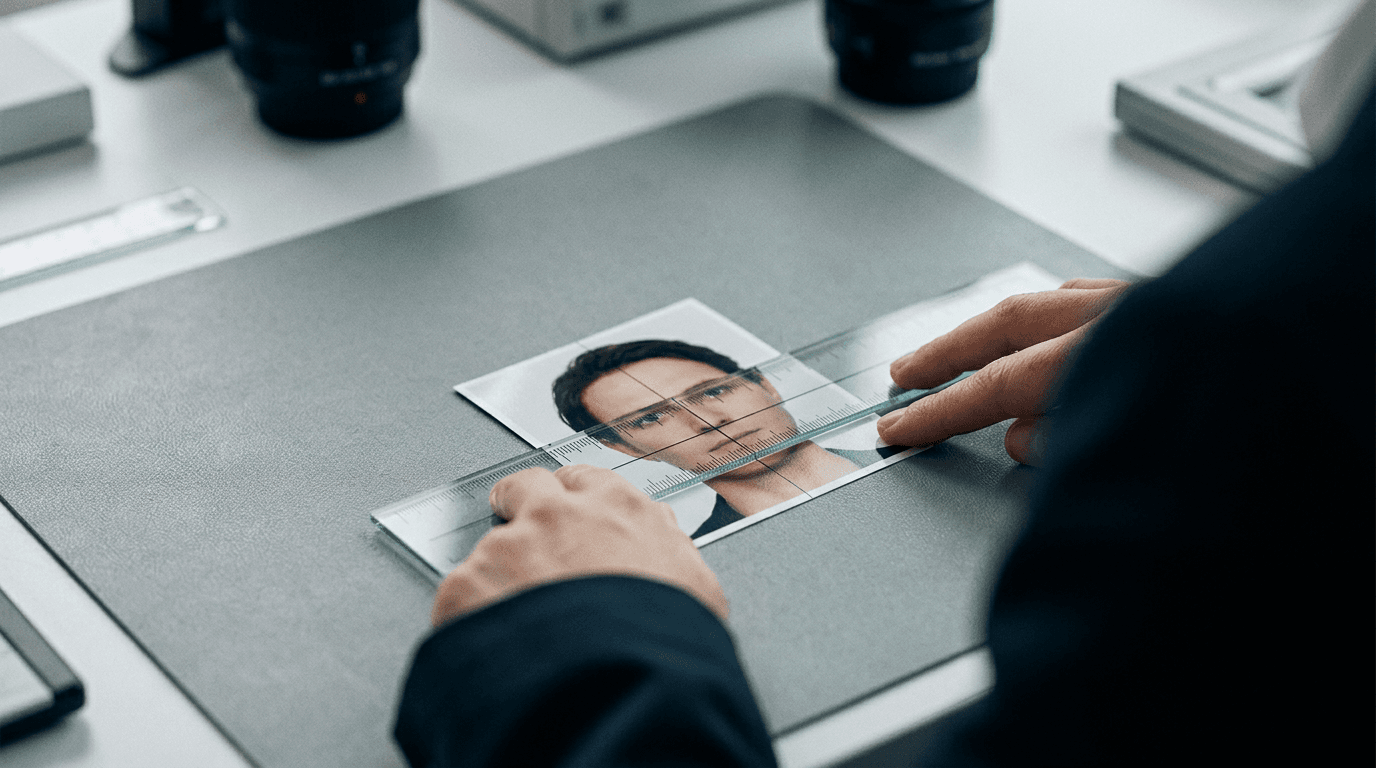
Handing an infant's passport application across a consulate desk only to have the supporting documents rejected because the biometric framing is off by two millimeters is a frustrating reality for many traveling families. When evaluating Polish passport photo requirements, parents often assume that a standard passport image shot for one jurisdiction will naturally satisfy another. This assumption routinely leads to processing delays. European biometric standards rely on strict geometric mapping, requiring the distance between the applicant's pupils, the position of the chin, and the crown of the head to fall within precise millimeter brackets. For infants and toddlers, maintaining a neutral expression while meeting these rigid background and lighting criteria requires specific technical alignment rather than simple portrait photography.
Quick Summary
European biometric documentation demands exact physical dimensions and facial mapping to pass automated consulate scanning systems. Navigating these specifications requires understanding the underlying hardware that validates the image.
- Most European countries mandate a 35x45mm physical print size.
- Facial coverage must occupy the vast majority of the vertical frame, leaving only a small margin at the top.
- Background colors vary strictly by jurisdiction, from pure white to light gray.
- Automated consulate software measures pupil distance and chin-to-crown ratios.
- Shadows, improper contrast, or visible hands in infant photos guarantee instant rejection.
Table of Contents
- Understanding Polish Passport Photo Requirements
- The Mechanics of Biometric Facial Recognition
- Analyzing French and Italian Photo Regulations
- German Dimension Rules and Grid Alignments
- Technical Tolerances for Infant Applications
- Common Hardware and Printing Failure Modes
- Comparison Table: European Passport Dimensions
- FAQ
- Recommended Reads
Understanding Polish Passport Photo Requirements
Securing a valid photo for a Polish passport involves satisfying the International Civil Aviation Organization (ICAO) standards, which govern the biometric processing of international travel documents. The Polish government requires a physical image measuring exactly 35 millimeters in width and 45 millimeters in height. Within this frame, the applicant's face must be centered, with the distance from the bottom of the chin to the top of the head (excluding hair volume) measuring between 31 and 36 millimeters. This specific ratio ensures that the facial structure dominates the frame, leaving just enough negative space for the automated scanning software to identify the boundary between the subject and the background.
Background coloration is a critical, often misunderstood component. A Polish passport photo must be taken against a plain, solid white background. The subject must face the camera directly, meaning profile or semi-profile angles are strictly forbidden. For families capturing these images at home, maintaining a pure white background without casting secondary shadows behind the subject requires diffuse, multidirectional lighting. A single overhead light source will cast a downward shadow under the chin and nose, altering the algorithmic perception of the applicant's facial structure.
When formatting a digital file to meet these specifications, resolution is just as important as framing. The image must be rendered at 300 dots per inch (DPI) minimum, though 600 DPI is preferable for high-fidelity facial mapping. If the resolution drops below this threshold, the resulting pixelation around the eyes and mouth can cause the biometric verification system to fail. If you are preparing an application, consulting a dedicated Germany Baby Passport Photo Guide can provide similar baseline technical frameworks, as the core biometric engines share foundational programming.
The Mechanics of Biometric Facial Recognition
Consulate hardware does not look at a photograph in the traditional sense; it maps a geometric grid over the image. The primary anchor points for this grid are the pupils. The software measures the exact distance between the left and right pupil, drawing a horizontal baseline. From this baseline, the algorithm projects secondary measurements: the distance to the tip of the nose, the horizontal width of the mouth, and the vertical drop to the baseline of the chin.

This rigid mathematical approach is why a neutral expression is mandatory. A smile alters the resting width of the mouth and raises the cheeks, which in turn slightly narrows the visible aperture of the eyes. To a human observer, the applicant looks happy; to a biometric scanner, the anchor points have shifted outside the accepted variance parameters, rendering the face unrecognizable when compared to the physical person standing at border control.
Practical rule: Always position the camera lens perfectly level with the applicant's eyes; an angle looking down or up by even five degrees distorts the algorithmic measurement of the chin-to-nose ratio.
In infant photography, these rules present a unique hurdle. A newborn lacks the neck strength to hold their head completely vertical, meaning parents often lay them down or support their head. If a parent's hand or fingers appear anywhere in the frame, the image processor flags an unauthorized object and rejects the file. The subject must be entirely isolated.
Analyzing French and Italian Photo Regulations
While the baseline geometry remains consistent across the Schengen Area, regional variations introduce critical traps for the uninformed applicant. French passport photos diverge sharply from the Polish standard regarding the background. France explicitly rejects pure white backgrounds. Instead, applicants must use a light, plain, but contrasting color, typically light gray or light blue. Submitting a white-background image to a French consulate guarantees rejection, as the local scanning hardware is calibrated to seek a defined contrast border along the entire silhouette of the head.
The physical dimension remains 35x45mm, and the facial sizing rules (32mm to 36mm from chin to crown) apply. However, French authorities are notoriously strict regarding eyewear. While some jurisdictions allow prescription glasses if there is no glare, French regulations strongly advise removing all glasses entirely to prevent any digital interference with the orbital mapping.
When assessing the passport photo size Italy requires, applicants will find the standard 35x45mm footprint. Italian consulates, however, place a massive emphasis on image contrast and exposure. The image must be printed on high-quality photographic paper with high resolution. Italy also strictly enforces the "eyes open and clearly visible" mandate. For infants, this requires timing the capture perfectly, as a half-closed eye will register as an anomaly in the pupil-tracking phase. If you are handling multiple international applications simultaneously, understanding how these localized background rules overlap is crucial. Reviewing a United States Baby Passport Photo Guide highlights a stark contrast, as the US utilizes a 2x2 inch square format, entirely incompatible with the European rectangular standard.
German Dimension Rules and Grid Alignments
The German passport photo size strictly adheres to the 35x45mm European standard, but the German Federal Print Office utilizes a specific biometric template known as the Fotomustertafel. This template relies on a highly regulated grid overlay. The central horizontal axis of the applicant's eyes must fall within a specific millimeter band measured from the bottom edge of the physical print. If the head is pitched forward or backward, shifting the eyes outside this narrow band, the photo is void.
German authorities also heavily scrutinize digital alterations. Any attempt to smooth skin, remove blemishes, or digitally enhance the contrast using consumer photo-editing software modifies the underlying pixel structure in ways that forensic scanners detect. The raw photographic capture must be structurally flawless. The lighting must be entirely uniform, eliminating any localized shadows on the face or background. Red-eye effect is an automatic failure, and attempting to correct red-eye digitally leaves artifacts that will also trigger a rejection.
For children and infants under the age of ten, Germany applies a slightly wider tolerance bracket for the facial height (ranging from 22mm to 36mm), recognizing the physiological differences in a developing skull. However, the background color must remain a neutral, light gray to ensure maximum contrast without triggering the overexposure risks associated with pure white backgrounds. Parents managing complex documentation across different regions can sometimes reference a UK Baby Passport Photo Guide to understand similar gray-background implementations, though exact facial proportion demands will still differ.
Technical Tolerances for Infant Applications
Capturing an infant's image for biometric processing requires navigating the narrow exceptions built into the ICAO regulations. Most European consulates recognize that infants under six months cannot reliably maintain a neutral expression, keep their mouth closed, or look directly at the lens on command.
While the requirement for the subject to be alone in the frame remains absolute, the enforcement of the closed-mouth rule is generally relaxed for newborns. A slightly open mouth is often accepted, provided the overall facial structure is clearly visible and not obscured by a pacifier, hands, or toys. The eyes, however, must be open. Capturing a newborn with fully open eyes often requires timing the session immediately after a nap, utilizing natural, indirect window light to avoid startling the child with harsh electronic flashes.
Supporting the infant is the most common failure point. Laying the baby on a flat, solid-colored sheet (white for Poland, light gray for France or Germany) is the standard method. If the parent must hold the baby, they must drape themselves entirely in a sheet matching the required background color, ensuring no part of their own face, hands, or clothing enters the focal plane. Even a slight wrinkle in the backdrop sheet can cast a shadow that the biometric software misinterprets as a physical object, causing the validation to fail.
Common Hardware and Printing Failure Modes
The transition from a perfect digital file to a physical print introduces a final layer of potential failure. Consulates require high-quality photographic paper, specifically forbidding standard inkjet printer paper, textured cardstock, or matte finishes that diffuse the scanning lasers. The print must be on glossy or semi-gloss photographic stock.
Thermal dye-sublimation printers, commonly found in pharmacy kiosks, are generally preferred over standard consumer inkjet models because they do not leave microscopic dot patterns. If a consulate scanner detects the halftone dot pattern of an inkjet printer, it may reject the image due to interference with the facial recognition algorithms. Furthermore, physical damage to the print is catastrophic. A paper clip mark, a smudge from a fingerprint, or a slight bend in the paper alters the light reflection during the scanning process.
Practical rule: Never cut the photograph yourself unless you possess professional guillotines; scissors leave a micro-serrated edge that can cause the photo to jam in the consulate's automated document feeders.
When relying on third-party services to process and format these specific dimensions, utilizing a platform that understands these nuances is critical. Services that fail to properly map the 35x45mm boundaries result in unusable prints. Understanding a provider's 100% Refund Policy is essential when evaluating the risks of automated processing against strict European consulate standards.
Comparison Table: European Passport Dimensions
| Jurisdiction | Physical Size | Chin-to-Crown Height | Background Requirement | Infant Tolerance |
|---|---|---|---|---|
| Poland | 35x45 mm | 31-36 mm | Pure White | High (Mouth open allowed for newborns) |
| France | 35x45 mm | 32-36 mm | Light Gray / Blue (No White) | Medium (Strict no-glasses enforcement) |
| Germany | 35x45 mm | 32-36 mm (22-36mm under 10) | Light Gray | High (Wider facial height brackets) |
| Italy | 35x45 mm | 32-35 mm | White | Low (Strict eye-open enforcement) |
FAQ
What makes a photo for a Polish passport valid?
A valid image must measure exactly 35x45mm, feature a pure white background, and the applicant's face must occupy 70-80% of the vertical space (31-36mm from chin to crown) with a neutral expression and no shadows.
Can I use the same photo for French and Polish applications?
No. While the physical dimensions are the same, French authorities explicitly prohibit pure white backgrounds, requiring light gray or blue instead, making a Polish-compliant photo invalid in France.
How do consulates measure the biometric data on a printed photo?
Consulate scanners project a geometric grid over the digital scan of the print, using the distance between the center of the pupils as the foundational baseline to measure all other facial proportions.
Why do infant passport photos get rejected so frequently?
Rejections typically occur because a parent's hand is visible supporting the child, the background sheet is heavily wrinkled causing shadows, or the infant's eyes are not fully open facing the camera lens.