Professional Passport Photos vs DIY: A Guide to Getting Your Same Day Passport Photos in 2026
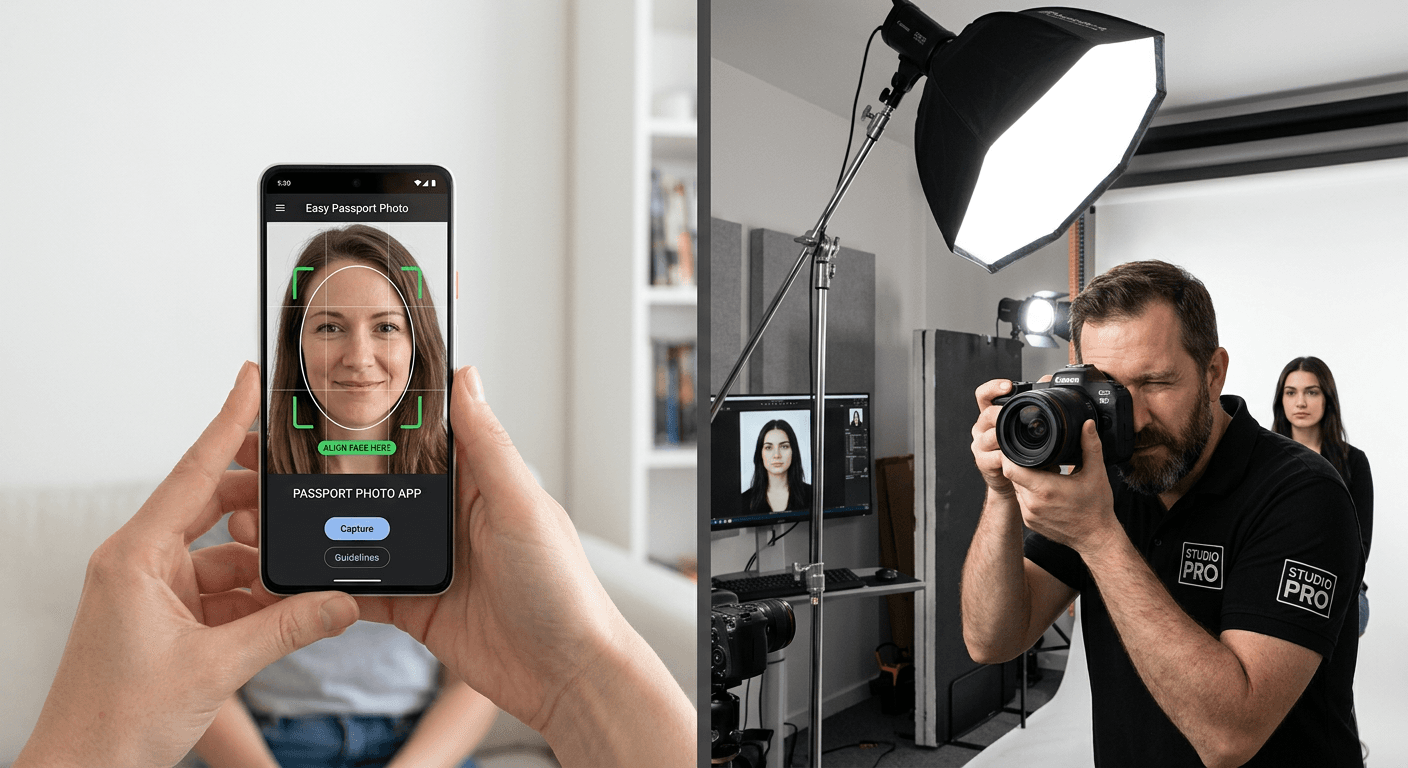
Securing compliant travel documentation is a critical step in international travel, and obtaining professional passport photos that meet strict government standards is often the most significant bottleneck. Whether you are prepping for a family vacation or a business trip, the need for same day passport photos frequently leads travelers to choose between visiting a brick-and-mortar facility or utilizing modern digital tools. Understanding the nuances of each approach is essential for ensuring your application is not delayed due to technical rejections regarding lighting, sizing, or background requirements.

Quick Summary
This guide evaluates the efficacy of professional photography services versus AI-powered digital platforms for obtaining compliant travel images. Key considerations include cost, time efficiency, and the risk of biometric rejection.
- Professional studios offer personalized handling but often require appointment scheduling.
- AI-based digital platforms provide instant, automated compliance checks for home printing.
- Retail kiosks balance convenience with standard output quality.
- Government agencies hold stringent requirements for lighting and head-to-chin proportions.
Table of Contents
- Professional Studio Services
- AI-Driven Passport Photo Platforms
- Retail Passport Photo Kiosks
- Comparison Table of Passport Photo Solutions
- How to Choose the Right Method
- FAQ
- Recommended Reads
Professional Studio Services
Engaging a professional photographer for passport photos remains the gold standard for those who require guaranteed quality, particularly for individuals with specific needs such as infants or those needing specialized visa documentation. Professional photographers understand the complexities of studio lighting, which is vital for preventing shadows on the face or background-an issue that causes many applications to be flagged by government biometric systems.
Beyond technical expertise, professional studios provide a personalized experience. They are adept at guiding subjects through positioning requirements, ensuring that neutral expressions and proper head-to-shoulder alignment are maintained. For complex requirements such as a US baby passport photo, this level of hands-on attention can save significant time and stress, as studio experts often have direct experience with the latest government regulations.
AI-Driven Passport Photo Platforms
In recent years, AI-based platforms have emerged as a dominant alternative for those seeking fast passport photo solutions from the comfort of home. These tools use sophisticated algorithms to perform automated background removal, crop images to the precise specifications required by different countries, and conduct biometric verification to ensure the file meets international standards. Many users find this approach highly effective for tasks like creating a UK baby passport photo, where manual photography can be challenging due to the infant's movement.
These platforms typically operate on a "take, upload, process" workflow. Once the AI finishes its adjustments, the user receives a digital file that can be printed on standard photo paper or at a local printing center. The primary advantage here is cost-efficiency and convenience; however, the burden of capture remains on the user, necessitating high-resolution input images with even, non-directional lighting. For those applying for a Canada baby passport photo, the ability to retake the photo multiple times at home is a major benefit over the limited shots provided in a studio setting.
Retail Passport Photo Kiosks
Many travelers look for a passport photograph near me and settle on local drugstores or shipping centers. These locations provide a mid-range solution that occupies the space between professional portrait studios and DIY methods. Retail kiosks generally utilize a standardized lighting setup and a fixed camera, which minimizes the technical error rate compared to amateur photography.
However, the quality of these passport picture services varies significantly based on the staff's training. While they are usually adequate for standard adult renewals, they may lack the patience or specialized equipment required for difficult subjects, such as infants or individuals with mobility issues. Before choosing a retail option, confirm that the location has a dedicated photo system, as some locations have phased out printing services in favor of simple scanning.
Comparison Table of Passport Photo Solutions
| Method | Cost | Speed | Convenience | Best For |
|---|---|---|---|---|
| Professional Studio | High | Moderate | Low | Complex visas, infants |
| AI Platform | Low | Instant | High | DIY, quick turnaround |
| Retail Kiosk | Moderate | Fast | Moderate | Standard renewals |
How to Choose the Right Method
Selecting the right method for your passport photos depends largely on your timeline, budget, and the technical requirements of the passport office. If you are applying for a standard renewal, a retail kiosk or a reputable AI-based tool will likely suffice. However, if you are navigating a New Zealand baby passport photo application or other specialized international travel documents, the strictness of the biometric requirements suggests that professional oversight or highly specialized software is necessary.
Consider the "compliance guarantee" offered by many digital platforms. Because government offices can be stringent, using a service that explicitly guarantees biometric compliance is a proactive way to mitigate the risk of rejection. Always check the official website of the passport authority you are dealing with; some countries, like Germany, have specific, non-negotiable facial symmetry requirements that even a slightly off-center DIY photo may fail to meet. Consult their official photography guides to ensure you have the correct understanding of the necessary head-to-chin measurements before making your final selection.
FAQ
Can I take my own passport photo with a smartphone?
Yes, you can, provided your smartphone camera has sufficient resolution and you have proper, even lighting. AI-powered platforms can then handle the background removal and cropping to ensure it meets government standards.
How long are passport photos valid?
Most government agencies require passport photos to be taken within the last six months to ensure they accurately reflect your current appearance.
What is the most common reason for passport photo rejection?
Poor lighting, specifically shadows on the face or the background, and incorrect head size relative to the photo frame are the most frequent reasons for rejection.