Standard Passport Photo Sizes for Different Countries
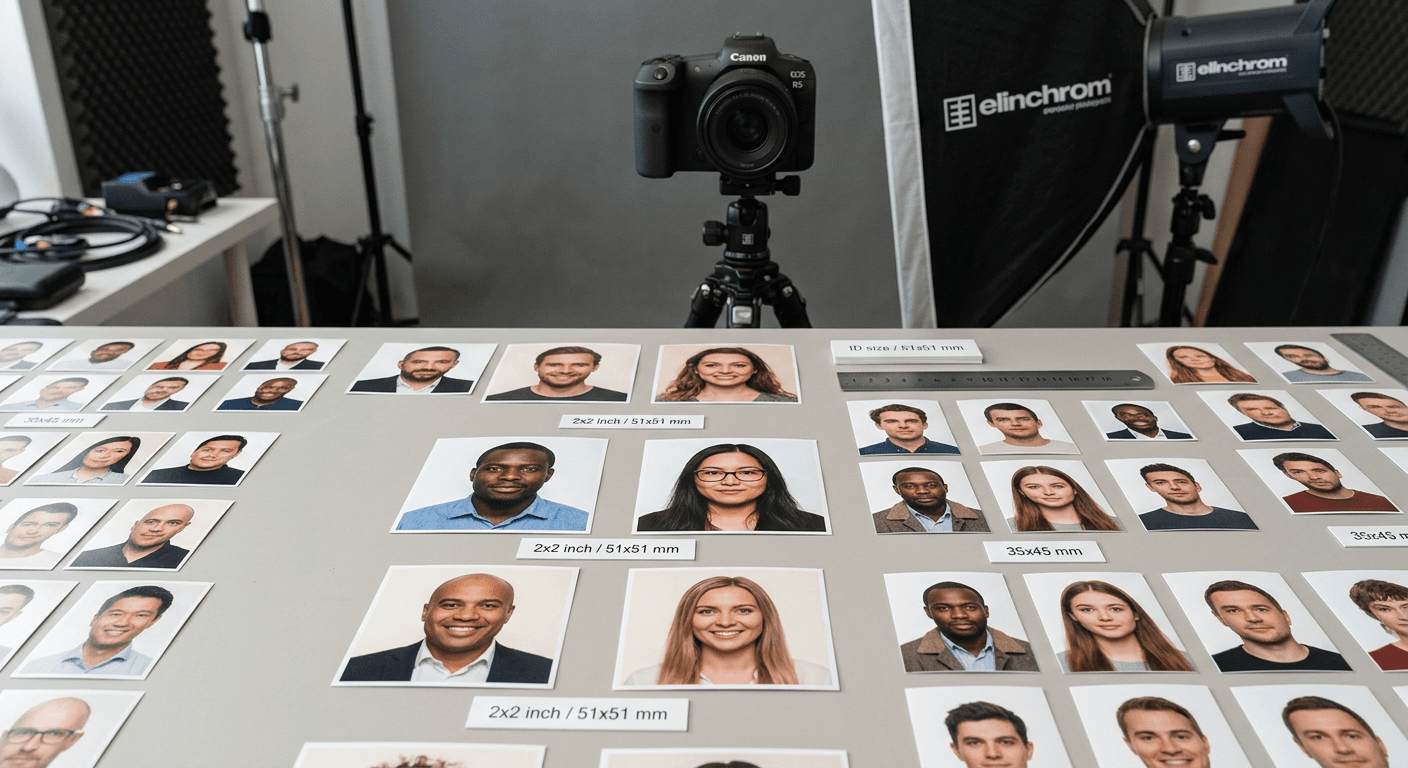
Navigating the complexities of international travel documentation begins with understanding that a passport size photo is not a universal constant. While many travelers assume a standard 2x2 inch print works globally, national authorities maintain strict, varying requirements for head size, background color, and physical dimensions. Using the wrong format is the most common reason for application delays or outright rejection at consulates and passport offices worldwide.
Quick Summary
Passport photo standards vary significantly by country, requiring adherence to specific dimensions and biometric criteria. A passport size photo must comply with local government regulations regarding frame size, lighting, and facial expression to ensure successful identity verification.
- Always verify the specific dimension requirements for your destination country before taking a photo.
- Standard dimensions differ between the United States and international norms.
- Professional compliance is mandatory to avoid processing delays.
Table of Contents
- United States Passport Photo Size
- Standard Passport Photo Dimensions in the UK
- Canadian Passport Photo Requirements
- Australian Passport Photo Standards
- Schengen Area and European Standards
- Asian Passport Photo Specifications
- Middle Eastern Passport Photo Guidelines
- Frequently Asked Questions
- Recommended Reads

United States Passport Photo Size
The united states passport photo size is strictly defined as 2x2 inches (51x51 mm). This square format is unique compared to the rectangular standards found in many other parts of the world. The head must be positioned between 1 inch and 1 3/8 inches (25-35 mm) from the bottom of the chin to the top of the head, against a plain white or off-white background.
For those preparing documentation for infants, ensure you consult a professional us baby passport photo guide, as the rules for children often require specific assistance to achieve the necessary neutral expression and gaze. Failure to meet the 2x2 inch requirement or having shadows on the background will result in an immediate application rejection by the Department of State.
Standard Passport Photo Dimensions in the UK
The United Kingdom uses a 35mm wide by 45mm high format, which is the international ISO/IEC standard common across much of Europe. The subject must be centered, with the head occupying 29mm to 34mm of that vertical height. Unlike the US square format, the UK standard requires a cream or light gray background, though plain white is often accepted.
Following the correct uk baby passport photo protocols is essential for parents, as HM Passport Office is notoriously strict about closed mouths and neutral expressions. Even minor deviations in background light or incorrect proportions can force a digital system to flag the image as non-compliant.
Canadian Passport Photo Requirements
Canada maintains some of the most rigorous documentation standards globally, requiring a 50mm x 70mm photograph. The head must be between 31mm and 36mm in height. Crucially, the back of the photo must contain specific information, including the name and address of the photography studio and the date the photo was taken, often provided by a guarantor.
Because these photos serve as part of a formal identity verification process, understanding the nuances of the canada baby passport photo requirements is critical for families. The requirement for a guarantor to sign the back of one print necessitates that the photo must be of high physical quality to ensure the signature and ink do not bleed into the image.
Australian Passport Photo Standards
Australia utilizes the 35mm by 45mm dimension. The Department of Foreign Affairs and Trade (DFAT) enforces strict rules regarding the "neutral expression," where the mouth must be closed and eyes looking directly into the camera. The background must be a plain, light color—usually white or light gray—to ensure biometric software can correctly map facial features.
When capturing images for an australian baby passport photo, the challenge lies in capturing an infant while they are awake and looking at the lens. Since the Australian passport office does not permit props, such as blankets or visible hands, specialized techniques are often required to support the child safely without encroaching on the frame.
Schengen Area and European Standards
Most European nations, such as Germany, adhere to the Schengen/ICAO standards. While the 35mm x 45mm frame is standard, European biometric requirements often specify that the face must take up 70% to 80% of the photograph. This is significantly larger than the proportion required by the germany baby passport photo standards or other non-EU countries.
Biometric compliance is the primary driver here. Because European borders utilize sophisticated facial recognition software, the alignment of the eyes and the chin position within the photo must be precise. Deviating from these metrics can result in issues during automated border control checks at international airports.
Asian Passport Photo Specifications
Asian countries vary significantly in their requirements. For example, Singapore uses a 35mm x 45mm standard with a white background, yet the lighting must be perfectly balanced to prevent any facial shadows. When preparing for a singapore baby passport photo, parents must be aware that the strict facial recognition criteria applied to adults are equally enforced for infants, necessitating a very clear, sharp image.
Other nations in the region may require different sizing, such as 33mm x 48mm. Always cross-reference the consulate’s official documentation guidelines before finalizing your photos. Relying on a "one size fits all" approach for Asian visas or passports is a guaranteed way to fail at the application window.
Middle Eastern Passport Photo Guidelines
Countries such as Saudi Arabia often follow the standard 35mm x 45mm format, but they frequently have specific requirements regarding head coverings and traditional attire. When taking a saudi baby passport photo, it is vital to ensure that the facial features remain fully unobstructed by clothing or accessories, maintaining the integrity of the biometric data.
In many Middle Eastern jurisdictions, the background must be white, and the lighting must be high-key to minimize shadows. These specifications are designed for high-resolution scanning at border control points. Neglecting these details often leads to processing delays, particularly during Hajj or Umrah visa applications where volume-based processing is high.
Frequently Asked Questions
1. Can I use a 2x2 inch photo for a European passport application? No. Most European countries require a 35mm x 45mm format. Using a US 2x2 inch photo will lead to a rejected application because it does not fit the scan tray of the national biometric systems.
2. Why do photo specifications change for babies? While the dimension requirements remain the same, the practical application changes. Many countries allow for more flexibility regarding the "closed mouth" rule for infants under one year old, but the background and lighting requirements remain non-negotiable.
3. Is the background color important? Yes, absolutely. Biometric software relies on the contrast between the subject and the background. Using a non-compliant background color, such as blue or gray when white is required, can cause the automated system to fail to isolate your facial features.