Strict Chinese Visa and Passport Photo Requirements for 2026
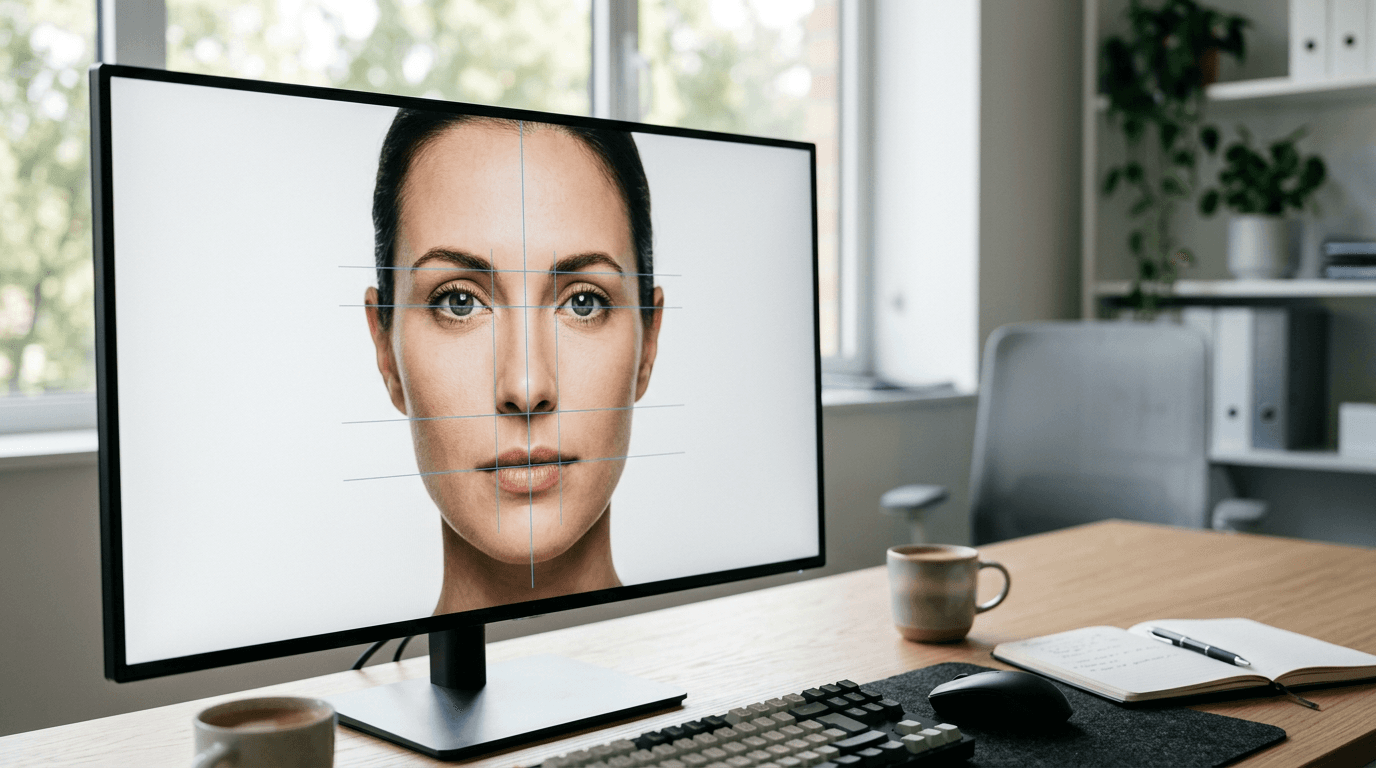
A standard 2x2 inch photograph submitted for a Chinese visa fails at the very first optical scan, long before a human consular officer ever looks at the application. The optical character recognition software deployed by Chinese consular services is calibrated for a fundamentally different aspect ratio, and attempting to crop a standard square image to fit their rectangular template almost always distorts the critical biometric distances between the applicant's eyes, nose, and chin. Meeting the chinese passport photo requirements means abandoning the default settings of local pharmacies and building the image around the exact dimensional specifications dictated by the scanning algorithm.
Quick Summary
The Chinese biometric photograph standard requires a strictly formatted 33x48 millimeter vertical image with pure white background illumination and precise facial mapping. The submission is evaluated simultaneously on physical dimensions, digital file weight, and the unobstructed visibility of specific biometric anchor points across the face.
- Overall dimensions must measure exactly 33mm wide by 48mm high.
- The applicant's head must occupy between 28mm and 33mm of the vertical space.
- Digital submissions require a minimum resolution of 354x472 pixels and strict file size limits.
- Eyebrows, ears, and the entire jawline must be completely visible without shadow.
- Clothing must contrast sharply with the white background to define the shoulders.
Table of Contents
- Core dimensions of chinese passport photo requirements
- Why lighting geometry dictates acceptance
- Wardrobe, grooming, and biometric anchors
- How biometric constraints apply to infant photography
- Digital file compression and print dpi
- What breaks first in consular review
- Dimension Comparison Table
- FAQ
- Recommended Reads
Core dimensions of chinese passport photo requirements
The fundamental difference between a North American identity document and a Chinese identity document is the aspect ratio. The china visa passport photo size is firmly set at 33mm in width and 48mm in height. This creates a narrow, elongated portrait that frames the head and extreme upper shoulders, leaving very little negative space on the horizontal axis.

Within that 33x48mm frame, the placement of the subject's head is heavily regulated. The algorithm requires the head height (measured from the absolute top of the hair or skull to the lowest point of the chin) to fall between 28mm and 33mm. If the head exceeds 33mm, the automated system flags the photo as "zoomed in," meaning the camera lens was positioned too closely, potentially distorting the optical distance between the eyes. If the head is smaller than 28mm, the facial features lack the pixel density necessary for accurate biometric mapping.
Width is equally constrained. The head width, measured straight across the face from the outer edges of the cheekbones, must fall between 15mm and 22mm. This specific china passport photo size parameter prevents applicants from turning their heads. Even a five-degree rotation alters the horizontal measurement of the face, shortening the visible width on one side and causing an immediate rejection. The optical scanner expects perfect symmetry, plotting a vertical center line straight down the bridge of the nose to divide the image exactly in half.
Spacing matters just as much as the subject's dimensions. The system requires between 3mm and 5mm of empty background space above the applicant's head. This ensures the top of the head is not cropped out during the physical printing or digital framing process.
Why lighting geometry dictates acceptance
The background for a Chinese passport or visa photo must be pure, untextured white. While some older guidelines mention light blue, modern consular scanning equipment is calibrated almost exclusively for a pure white backdrop (hex code #FFFFFF in digital terms). This creates a stark contrast boundary around the silhouette of the applicant.
Consular facial recognition software relies on edge detection. It finds the perimeter of the head and shoulders by looking for the abrupt transition between the subject and the background. If a shadow falls on the wall behind the applicant, the software reads that shadow as a physical extension of the person's body. A shadow cast over the right shoulder suddenly makes the applicant's right side appear massive and asymmetrical, breaking the biometric mapping process.
Lighting the subject's face is where most self-taken photographs fail. The light must be entirely flat and uniform. Directional lighting - such as standing next to a window - illuminates one side of the face while leaving the other side in relative darkness. The algorithms interpret heavy contrast on the face as physical topography. A deep shadow on one side of the nose is read as an asymmetrical, deformed facial structure. To pass the optical scan, the face must be lit from the front, filling in all shadows under the eyes, beneath the nose, and below the chin.
Practical rule: If you can see the texture of the wall behind the subject, or if the subject casts any visible shadow against that wall, the lighting is insufficiently separated and the photo will fail the contrast check.
Wardrobe, grooming, and biometric anchors
The strict adherence to edge detection creates rigid rules for clothing. Because the background is pure white, the applicant cannot wear a white shirt, a light gray sweater, or any pale garment that might blend into the backdrop. When a white shirt meets a white background, the scanning algorithm cannot find the applicant's shoulders. To the software, the subject appears as a floating head, which immediately triggers a rejection. Applicants must wear dark, highly contrasting colors. Uniforms of any kind, including military, police, or clerical attire, are strictly prohibited.

Facial grooming and hair placement must obey the rule of biometric anchors. The software needs to map specific points on the face: the orbital bone (eyebrows), the jawline, and the positioning of the ears. Hair draped over the forehead that obscures the eyebrows breaks the vertical measurement from the brow to the chin. Hair cascading down the sides of the face that covers the ears breaks the horizontal measurement of the head width.
The chinese passport photo size and format rules mandate that both ears and both eyebrows must be completely visible. For individuals with heavy bangs, the hair must be pinned back or swept aside. For individuals with long hair, it should be tucked securely behind the ears or tied back.
Glasses introduce a high risk of failure. While technically permitted if the lenses are perfectly clear and the frames are extremely thin, the reality of digital photography makes them a liability. The camera flash frequently catches the glass, creating a white glare that obscures the pupil. Additionally, thick frames often cast micro-shadows directly across the orbital bone or obscure the exact edge of the eye. The standard practice for ensuring acceptance is to remove eyeglasses entirely for the photograph.
How biometric constraints apply to infant photography
Photographing a baby or a young child for a visa introduces unique logistical challenges, but the consulate does not relax the optical requirements. The biometric algorithm processes an infant's face using the exact same metrics it applies to an adult.
The primary difficulty lies in supporting the child without introducing foreign objects into the frame. The background must remain pure white, and no hands, arms, or supporting pillows may be visible. The standard approach is to lay the infant flat on their back on a plain white sheet, photographing them from directly above. This removes the need for physical support and allows gravity to keep the child relatively still. Parents attempting this approach should be aware that the child's head must still remain perfectly centered and forward-facing.
Facial expression rules are particularly stringent. The infant's eyes must be open and looking directly at the camera lens. More importantly, the mouth must be completely closed. An open mouth alters the vertical distance between the bottom of the nose and the point of the chin, which is a key biometric measurement. Pacifiers, teething rings, and toys are entirely forbidden, as they obscure the lower half of the face.
For families navigating these precise constraints, utilizing AI-powered passport photo platforms can strip away the background inaccuracies. These systems take a standard image, identify the child's biometric anchors, and digitally replace the surrounding environment with a compliant white background, eliminating the shadows that typically ruin infant photography on a bedsheet. This automated processing mirrors the strict British infant photo rules often encountered by international travelers, where background purity is equally unforgiving.
Digital file compression and print dpi
Many applications now require a digital upload alongside or instead of physical prints. The digital specifications are just as rigid as the physical dimensions.
The minimum acceptable resolution for a digital upload is 354 pixels in width by 472 pixels in height. However, the optimal recommended resolution is slightly higher at 420x560 pixels, which prevents pixelation when the consulate processes the image. The aspect ratio must remain mathematically identical to the 33x48mm physical print.
The file size is heavily restricted. The consular upload portal will simply reject the file before processing if it falls outside the acceptable weight range. The image must be larger than 40 kilobytes to ensure it contains enough data for biometric mapping, but smaller than 120 kilobytes to prevent overwhelming the consular servers. Achieving this precise file size requires careful JPEG compression. If the compression is too aggressive, digital artifacts (blocky, pixelated squares) will appear around the sharp edges of the applicant's hair and shoulders, failing the edge-detection scan.
Color space must be 24-bit RGB true color. Grayscale, sepia, or heavily filtered images are forbidden. The color temperature of the photograph must accurately reflect the applicant's natural skin tone without heavy saturation or artificial tinting.
For physical submissions, the image must be printed on high-quality, glossy photographic paper. Matte paper diffuses light and reduces the sharpness of the image, which can disrupt the scanner. The printer output must be at least 300 DPI (dots per inch). Printing a low-resolution digital file at a larger size will result in a blurry print that fails inspection. Any applicant planning to print their own photos must read their printer's technical compliance terms to verify it can output true 300 DPI on glossy stock without ink banding.
What breaks first in consular review
When a visa application is delayed or denied due to photography, the applicant rarely receives a detailed technical explanation. The rejection notice typically cites a generic "non-compliant photo" error. Understanding the distinct failure modes allows applicants to diagnose their images before submission. Here are the four distinct problems that look identical from the outside but require completely different fixes.
1. The floating head anomaly
This occurs when the algorithm cannot map the lower boundary of the applicant's shoulders. It happens almost exclusively because the applicant wore a shirt that was too light in color or heavily overexposed by the camera flash.
- Is the boundary between your shoulder and the background sharply defined?
- Are you wearing a pastel, white, or pale gray top?
- Did the flash wash out the color of your clothing in the final print?
If the answers point to a lack of contrast, the only fix is to retake the photo wearing a dark, solid color like navy, black, or dark green.
2. The skewed aspect ratio
This failure happens when an applicant takes an image conforming to standard United States passport photo dimensions (2x2 inches) and attempts to digitally squeeze or forcefully crop it into the 33x48mm Chinese box. The horizontal compression makes the applicant's face appear artificially thin, failing the facial geometry check.
- Did you start with a square photo and crop the sides off?
- Does the face look slightly longer or thinner than in reality?
- Is the distance from the chin to the top of the head larger than 33mm?
To fix this, the photo must be shot and cropped organically for the 33x48mm ratio from the original, unedited source file.
3. The micro-shadow rejection
Unlike a massive drop shadow on the wall, a micro-shadow occurs directly on the face. It is usually caused by overhead lighting, which casts shadows beneath the eyebrows, under the nose, and below the lower lip. The algorithm reads these deep shadows as empty space or structural anomalies.
- Is the area directly beneath the eyes significantly darker than the cheeks?
- Can you see a defined shadow line directly below the chin on the neck?
- Are the ears casting a shadow against the hair behind them?
Practical rule: To eliminate micro-shadows, position a secondary, softer light source directly in front of the subject, slightly below eye level, to fill in the dark spaces created by overhead room lights.
4. The obscured orbital bone
This is a grooming failure. The software uses the top of the eye socket and the brow line to measure the vertical tilt of the head. Hair that falls across the forehead, even if it is somewhat translucent, disrupts this measurement.
- Does any part of your hair touch or cross over your eyebrows?
- Are the inner and outer corners of both eyes completely visible?
- Are the frames of your glasses touching the lower line of your eyebrow?
Applicants dealing with constant rejections should study the rejection evidence requirements of their chosen photo service to understand exactly which biometric marker triggered the consular software to flag the image.
Dimension Comparison Table
The differences between standard North American sizing and the Chinese requirement are stark. Submitting the wrong format guarantees a rejection.
| Specification | Chinese Visa/Passport | US Visa/Passport | Consequence of error |
|---|---|---|---|
| Overall Size | 33mm x 48mm | 2 x 2 inches (51x51mm) | Optical scanner rejection due to aspect ratio mismatch. |
| Head Height | 28mm to 33mm | 25mm to 35mm | Flagged as zoomed in or lacking pixel density. |
| Head Width | 15mm to 22mm | Not strictly defined | Horizontal facial mapping failure. |
| Background | Pure White (#FFFFFF) | White or Off-White | Edge detection failure; shadows mapped as body mass. |
| File Size (Digital) | 40kb to 120kb | Up to 240kb | Upload portal refusal before processing begins. |
FAQ
Can I wear makeup in my Chinese passport photo? Yes, but it must be entirely neutral and natural. Heavy contouring alters the optical structure of the cheekbones and jawline, which will cause the facial recognition algorithm to fail. Avoid glossy lipsticks and heavy eyeliner.
Why was my photo rejected for wearing a white shirt? The optical scanning software uses edge detection to separate the applicant from the pure white background. A white shirt blends directly into the backdrop, making it impossible for the system to locate your shoulders and properly center your torso.
Do babies need to have their eyes open for the photograph? Yes. While some countries offer leniency for newborns, the Chinese biometric standard requires all applicants, regardless of age, to have fully open eyes and a completely closed mouth to establish the correct facial geometry.
Can I digitally remove the background of a photo to make it pure white? You should only use specialized software designed for biometric documents. Standard photo editing tools often leave a jagged digital artifact line around the hair, or worse, accidentally clip off portions of the ears, which instantly invalidates the image.
What should I do if my digital file is larger than 120kb? You must compress the JPEG file. If you are unable to lower the file size without causing heavy pixelation on the face, you need to use a dedicated resizing tool or contact a platform's support team to troubleshoot digital photo validity while maintaining the required 300 DPI.