Unpacking the Exact India Passport Photo Requirements for 2026
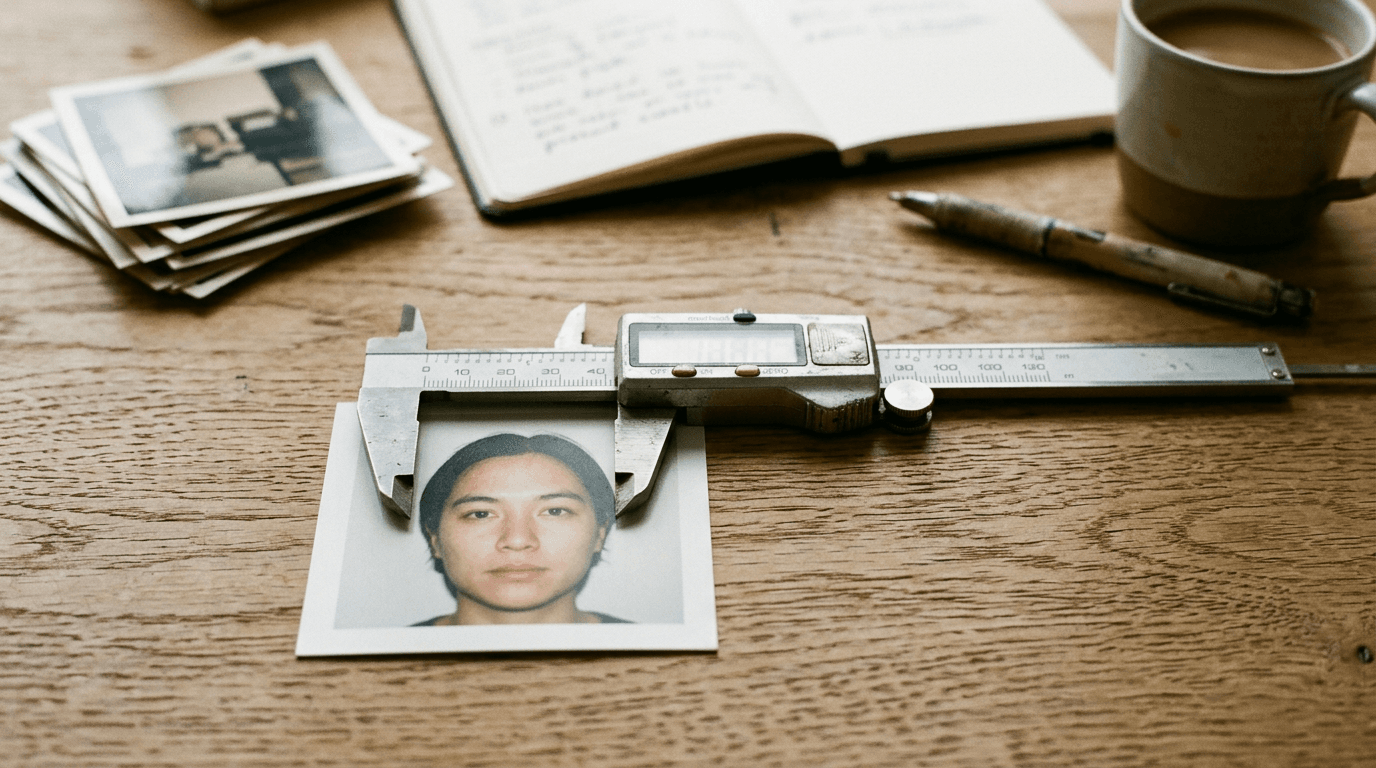
A two-millimeter drop shadow beneath an infant's earlobe goes completely unnoticed by the naked eye. To the facial recognition scanner at a consulate or passport processing center, that faint gray smudge obscures the strict edge of the jawline, triggering an automatic rejection of the document. Understanding the exact india passport photo requirements prevents the costly delay of an application. The regulations govern significantly more than just the physical paper dimensions; they mandate precise head proportions, rigid lighting uniformity, and total background isolation to ensure the final image passes automated biometric evaluation.
Quick Summary
The standard for an Indian passport photograph requires a 51mm by 51mm (2x2 inches) unmounted image with a plain white background, capturing the applicant's full face perfectly centered within the frame. Strict biometric compliance dictates head size, eye visibility, and lighting uniformity to facilitate automated facial recognition scanning.
- Physical dimensions must be exactly 2x2 inches (51x51 mm).
- The head must occupy between 25 mm and 35 mm (1 to 1 3/8 inches) of the total height from chin to crown.
- Backgrounds must be plain white, devoid of any texture, patterns, or cast shadows.
- Eyeglasses must be removed entirely to prevent glare and frame obstruction.
- Infants require specific horizontal posing techniques to ensure no visible support hands or props appear in the frame.
Table of Contents
- The core india passport photo requirements dictate strict physical dimensions
- Why background lighting causes the most application rejections
- Where infant and child photography rules differ from adults
- How clothing choices interfere with biometric scanning
- When to rely on digital formatting versus studio prints
- What breaks first when attempting smartphone photography at home
- FAQ
- Recommended Reads
The core india passport photo requirements dictate strict physical dimensions
The foundational rule for Indian travel documents is the square layout. Unlike the standard 35x45mm rectangular format used by many European nations, the Indian format requires a 51x51mm (2x2 inches) square. This exterior boundary is only the first constraint. Inside that square, the applicant's head must fit within a precise millimeter range to allow facial recognition algorithms to map the distance between the eyes, nose, and chin.

From the bottom of the chin to the crown of the head, the subject must measure between 25 and 35 millimeters. The "crown" refers to the top of the skull, not the top of the hair, meaning individuals with high hairstyles or voluminous hair must mentally calculate the skull's actual peak when measuring. If the head is too large, the cropping tool used by border authorities cuts off the hair or ears. If it is too small, the resolution of the facial features degrades when the software automatically zooms in to capture the biometric data. The eye line must sit between 28 and 35 millimeters from the bottom edge of the photo. The Indian format mirrors the layout specified in the United States Baby Passport Photo Guide, making the 2x2 standard somewhat recognizable to applicants accustomed to North American documentation.
Navigating these india passport photo specifications requires precise measurement before the file is finalized. When applying via the digital OCI (Overseas Citizenship of India) or Passport Seva portals, these physical dimensions translate into pixel counts. Digital uploads typically require a minimum resolution of 350x350 pixels and a maximum of 1000x1000 pixels, maintaining a perfect 1:1 aspect ratio. The file size is strictly capped, often between 10KB and 100KB for older portal systems, or up to 1MB for newer interfaces, requiring careful compression that reduces file size without introducing visual artifacts that blur the pupil edges.
| Specification Dimension | Required Measurement | Common Failure Point |
|---|---|---|
| Overall Size | 51mm x 51mm (2x2 inches) | Printed at wrong scale on 4x6 paper |
| Head Height (Chin to Crown) | 25mm to 35mm | Hair volume miscalculated as crown height |
| Eye Position (From Bottom) | 28mm to 35mm | Camera held too high or too low |
| Digital Resolution | 350x350 to 1000x1000 pixels | Incorrect aspect ratio causing stretching |
Why background lighting causes the most application rejections
A background that appears white to the human eye often registers as light gray, yellow, or blue to a digital sensor. Indian passport standards explicitly mandate a plain white background. Off-white, cream, and pale gray are grounds for immediate rejection. The mechanism behind this failure is white balance - the camera's attempt to adjust color based on the temperature of ambient light. Indoor tungsten bulbs cast a warm, orange hue, turning a white wall distinctly yellow. When an applicant stands against this wall, the resulting photo fails the "plain white" test.
Shadows present a more severe technical barrier. The flash on a smartphone fires from the same axis as the lens, creating a hard, dark drop shadow immediately behind the subject's head and neck. Biometric scanners read high-contrast lines to separate the applicant from the background; a dark shadow fused to the edge of the jawline causes the algorithm to miscalculate the shape of the face. To prevent this, the subject must stand at least one meter away from the wall. This distance allows the flash shadow to drop downward toward the floor, leaving the wall behind the head uniformly illuminated.
Specular highlights - bright reflections of light off the skin, usually on the forehead or the bridge of the nose - are equally problematic. These highlights blow out the local contrast of the skin, washing out the natural texture that scanners use to confirm the image is of a real, three-dimensional face. Diffused daytime light from a window, rather than direct, harsh indoor lighting, provides the even illumination required to avoid these highlights.
Where infant and child photography rules differ from adults
Photographing infants under twelve months old introduces unique physiological constraints. An infant cannot sit unassisted in a stool, and any hands supporting the child's head or back are strictly prohibited from appearing in the frame. The standard adult requirement of a perfectly neutral expression with a closed mouth is also functionally impossible for many newborns.
To accommodate these limits, Indian consulate authorities provide slight leeway for infants regarding expressions, tolerating a slightly open mouth or a non-neutral expression in children under one year. However, the eyes must be entirely open and visible. A sleeping infant will be rejected. Applying the strict indian passport size photo requirements to a moving infant requires a controlled environment that eliminates the need for adult support.
Practical rule: Never attempt to hold an infant upright for a passport photo. Instead, lay the baby flat on a plain white sheet placed on the floor, and photograph them from directly above, keeping the camera lens perfectly parallel to the child's face.
Shooting from above introduces a new lighting challenge: the photographer's body often blocks the overhead light, casting a shadow directly over the child's face. The solution is to position the infant near a large window, allowing natural light to sweep across the face at a 45-degree angle, while standing slightly offset to prevent casting a silhouette. Unlike the rigid strictures detailed in the United Kingdom Baby Passport Photo Guide, the slight tolerance for infant expressions in the Indian system makes the process marginally easier, provided the background and eye visibility remain perfect.
How clothing choices interfere with biometric scanning
The software that processes passport applications relies heavily on edge-detection algorithms. It looks for the sharp contrast between the applicant's clothing and the required plain white background to establish the boundaries of the torso. If an applicant wears a white or very pale shirt, that contrast disappears. The algorithm cannot distinguish where the shoulder ends and the wall begins, creating a "floating head" effect that results in a failed biometric scan. Applicants must wear dark, solid colors to create a strong visual separation.
Uniforms of any kind, including military, law enforcement, or recognizable corporate attire, are strictly prohibited. The image must represent the individual as a civilian traveler.
Eyewear represents another definitive boundary. Indian passport rules mandate that eyeglasses be removed entirely for the photograph. Tinted lenses and sunglasses are universally banned, but even clear prescription lenses cause failure. Glass reflects the ambient light in the room, creating glare that obscures the pupil. Furthermore, thick frames cast heavy shadows across the eye sockets and break the natural line of the cheekbone. Head coverings are permitted only for verified religious or medical reasons. If worn, they must not cast any shadows on the face, and the entire facial boundary - from the bottom of the chin to the top of the forehead, and both edges of the cheeks - must remain clearly visible. These contrast and clothing mandates closely mirror the strictures found in the Canada Baby Passport Photo Guide, where edge detection is equally critical.
When to rely on digital formatting versus studio prints
Failing to meet the exact india passport photo size requirements at the printing stage renders a perfect digital file useless. When submitting physical applications, the photograph must be printed on continuous-tone photographic paper, commonly referred to as dye-sublimation printing. Printing at home using a standard inkjet printer is a frequent source of failure. Inkjet printers create images by spraying microscopic dots of ink onto the page. To the naked eye, these dots blend together, but under a high-resolution consulate scanner, the halftone dot pattern becomes glaringly visible, interfering with the skin texture analysis and looking exactly like digital pixelation.
When a physical print is required, it must meet a minimum resolution of 300 DPI (dots per inch) and feature a matte or semi-matte finish to prevent scanner glare. If using a digital platform to process and crop the image, the final file is typically arranged on a standard 4x6 inch digital sheet containing multiple 2x2 inch cutouts.
Practical rule: Always instruct the retail pharmacy or print shop to print the 4x6 template at "100% scale" or "do not scale." Modern photo kiosks often default to "fit to page," which artificially shrinks the 2x2 inch boxes by a fraction of a millimeter and guarantees a physical dimensions failure at the counter.
For applicants wary of digital cropping and formatting errors, platforms that automate the biometric scaling often back their output with a 100% Refund Policy. This guarantee mitigates the financial risk of printing and submitting an improperly formatted file. Applicants handling their own files should ensure they do not repeatedly compress the JPEG, as compression artifacts create jagged edges along the pupils and lips. For a detailed breakdown of how to prepare files for retail printing, consult the Help Center.
What breaks first when attempting smartphone photography at home
The most common failure point for DIY passport photography is lens distortion. The primary camera on a modern smartphone utilizes a wide-angle lens, typically equivalent to a 24mm or 26mm focal length on a traditional camera. Wide-angle lenses are designed to capture broad scenes, not portraits. When a smartphone is held 12 to 18 inches from an applicant's face, the physics of the wide-angle glass distort the geometry of the subject.
This phenomenon, known as barrel distortion, causes objects closest to the lens (the nose) to appear unnaturally large, while objects further away (the ears) recede and appear artificially narrow. Because biometric scanners measure the precise millimeter distance between the bridge of the nose and the ears, a distorted image will fail to match the applicant in person.
The technical fix requires compressing the perspective. The photographer must step back at least four to six feet from the subject. From this distance, the facial features flatten into their true, natural proportions. Because stepping back makes the subject appear too small in the frame, the photographer should switch to the smartphone's 2x or 3x optical telephoto lens. This specific optical technique is universally necessary for biometric compliance and is heavily emphasized in the Australia Baby Passport Photo Guide for the exact same reason: maintaining authentic facial geometry.
FAQ
Can I wear prescription glasses in my Indian passport photo? No. Indian passport and visa regulations require all applicants to remove their eyeglasses for the photograph, regardless of whether the lenses are clear or tinted, to prevent glare and frame shadows.
What is the exact physical size required for the photo? The physical print must measure exactly 51mm by 51mm, which translates to a 2x2 inch square. The head size within that square must measure between 25mm and 35mm from the chin to the crown.
How do I take a compliant passport photo for a newborn? Lay the infant on their back on a plain, flat white sheet in a room with strong, natural window light. Photograph them from directly above. Ensure no hands, pacifiers, or toys are visible in the frame.
Is a white shirt acceptable for the photograph? No. A white or very pale shirt will blend into the mandatory plain white background, failing the edge-detection scan. Applicants should wear dark, solid colors to create necessary contrast.
Can I print my passport photo on a home inkjet printer? No. Home inkjet printers leave microscopic dot patterns that biometric scanners interpret as pixelation or blemishes. Photos must be printed on continuous-tone, high-quality photographic paper at a minimum of 300 DPI.